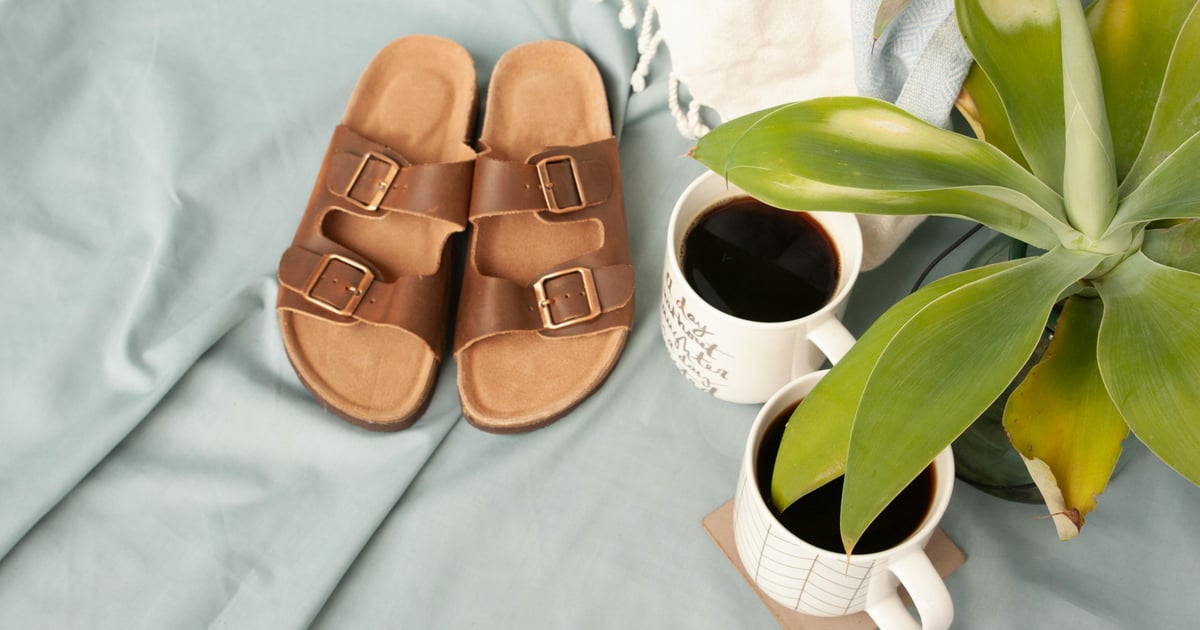
Most travel sandals look exactly like travel sandals. They are wide, chunky, strapped with neon-accent webbing, and they broadcast “American hiking tourist” from a hundred yards down a European cobblestone street. They also, to be fair, often work very well — the hiking-sandal category is built on real performance, and a good Chaco or Teva will walk you comfortably through 15 miles of mixed terrain in a way that a flat leather sandal will not.
The challenge is finding sandals that thread the needle: real support and walking comfort, water-friendly (or at least water-tolerant), and aesthetics that do not actively work against you in cities, at waterside dinners, or in any setting that is not a river crossing. Over several seasons of testing everything from $30 drugstore sandals to $200 Italian leather, we have settled on five that earn their space in a carry-on.
If you are building a broader hot-weather kit around these, see our beach vacation packing list and Southeast Asia packing guide for context on where sandals fit into the total system.
What we look for
A travel sandal has three jobs: cover long miles comfortably, survive wet conditions, and not make the rest of your outfit feel like a compromise. Most sandals do one or two of these well. The best do all three.
Real arch and heel support
The biggest difference between a travel sandal and a beach sandal is a molded EVA or cork footbed that supports the arch and cups the heel. A flat-sole sandal is fine for a mile of walking to a beach chair. It is miserable for a 12-mile city walking day. Every sandal in this roundup has structural arch support built into the footbed.
Water-ready construction
Not every travel sandal needs to be submersible. But the difference between a sandal you can walk through a puddle in versus a sandal that gets ruined by wet cobblestones is meaningful. Synthetic straps, quick-drying footbeds, and non-leather construction separate water-ready sandals from heirloom-leather sandals.
Adjustable fit
Straps that adjust in three or more places (heel, ankle, forefoot) fit a wider range of foot shapes and stay secure over miles. Slide-on sandals without adjustments are fine for short distances but lose security over longer walks.
Pack-flat construction
Travel sandals need to fit in a carry-on without dominating it. Lower-profile, flatter sandals pack better than chunky hiking-first designs.
Aesthetics that travel
The ability to wear a sandal to dinner, into a museum, on a city walk without self-consciousness — this is what separates a travel sandal from a pure technical hiking sandal. It matters.
The picks
1. Chaco Z/Cloud — The technical all-rounder
The Chaco Z/Cloud is the most technically capable sandal on this list. It is the lighter, slightly cushioned evolution of Chaco’s original Z/1 design — the single-webbing-strap sandal that defined the outdoor-sandal category. The Z/Cloud adds a thicker, more cushioned LUVSEAT footbed that takes the edge off the famously firm original.
Construction is a polyester jacquard strap (fully water-proof) threaded through the footbed in Chaco’s signature continuous loop, which means you can adjust fit at three points (heel, instep, forefoot) by pulling the single strap through. Once dialed in, the fit is customized to your foot shape. The Vibram outsole grips wet rock, wet cobblestone, and dry trail.
Specs: Polyester jacquard webbing, LUVSEAT PU footbed, Vibram outsole, adjustable single- loop strap. $110–$130.
Pros:
- Best long-distance walking comfort in the category
- Fully submersible and water-safe
- Vibram outsole grips on any surface including wet stone
- Extraordinarily durable — a pair routinely lasts 5+ years of heavy use
- Three-point adjustment fits most foot shapes
Cons:
- The most technical-looking sandal on this list; reads as outdoor gear
- Footbed is firm even in the cushioned version; new wearers need a break-in period
- Single-strap system can pinch if not adjusted carefully
- Heavier than minimalist alternatives
Best for: Trips with significant outdoor walking, water crossings, mixed urban-rural itineraries where you want one sandal to handle everything. Check Chaco’s price.
2. Teva Hurricane XLT2 — The comfortable everyday
The Teva Hurricane XLT2 is the sandal most travelers actually end up wearing day-to-day. It is softer than a Chaco, cushier underfoot, and easier to slip in and out of. The strap system is a three-point hook-and-loop design (heel, ankle, forefoot) that adjusts quickly without threading webbing.
The XLT2 footbed is a molded EVA with moderate arch support. Not as aggressive as a Chaco, but plenty for most people’s daily walking. Straps are a softer polyester webbing with a comfortable edge (no sharp webbing against skin). The sandal is fully water-safe and dries quickly.
Specs: Polyester webbing, molded EVA footbed, rubber outsole, three-point hook-and-loop strap. $60–$80.
Pros:
- Softer, more comfortable underfoot than Chaco for most wearers
- Faster to adjust (hook-and-loop vs threaded webbing)
- Much more affordable than Chaco at comparable performance
- Cleaner, slightly less technical aesthetic
- Wide color range including muted options that work in cities
Cons:
- EVA footbed compresses faster than Chaco’s PU — lifespan is 2–3 years of regular use vs 5+
- Less secure on aggressive terrain than Chaco
- Hook-and-loop wears out eventually and can collect sand/grit
- Slightly less durable outsole
Best for: Everyday travel where walking comfort is the priority over technical performance. The better choice for mixed city/light outdoor use. Check Teva’s price.
3. Keen Newport H2 — The closed-toe protective
The Newport H2 is the sandal-shoe hybrid that Keen invented the category for. The toe is fully enclosed in a molded rubber bumper, which protects against stubbed toes on rocks, uneven sidewalks, and surprise curbs. The rest of the upper is a quick-drying polyester webbing, and the whole shoe is fully submersible.
For travel specifically, the toe protection is unusually useful. Cobblestone streets, rocky beaches, and tide-pool walking all benefit from it. The trade-off is a bulkier profile and a somewhat more “outdoor” aesthetic than open-toe sandals.
Specs: Polyester webbing upper, molded rubber toe bumper, PU midsole, rubber outsole. $120–$140.
Pros:
- Only sandal on this list with full toe protection
- Handles rocky beaches, streams, and uneven surfaces better than any open-toe sandal
- Fully submersible and water-safe
- Excellent durability — 4+ years of regular use is normal
- Good support and cushioning for long walking days
Cons:
- Bulkiest sandal on this list; packs larger
- Distinctive aesthetic — “Keens” are easily recognizable and not universally flattering
- Runs warm in high heat; toe box traps air
- Heavier than open-toe alternatives
Best for: Trips with rocky coastlines, watersports, tide pool exploration, or anyone whose toes are perpetually stubbing on things. Check Keen’s price.
4. Ecco Yucatan — The city-friendly upgrade
The Ecco Yucatan is the sandal you take to Italy. It is a Danish-made leather-and-mesh sandal with a Receptor Technology footbed that Ecco has refined for over a decade. The upper is a blend of leather and stretch mesh panels, the footbed is a molded PU with leather topsurface, and the three-strap closure adjusts at heel, ankle, and forefoot.
What the Yucatan buys over the Chaco or Teva is aesthetics. It reads as a legitimate European summer sandal, not a river-rafting tool. The performance — long-distance comfort, arch support, strap security — is genuinely competitive with dedicated hiking sandals. The trade-off is water tolerance: the leather survives getting wet but is not meant to be submerged.
Specs: Leather and mesh upper, PU footbed with leather topcover, rubber outsole, three-strap closure. $150–$180.
Pros:
- Best aesthetic of any travel sandal — works in cities, restaurants, polished settings
- Excellent long-walking comfort from the PU footbed
- Real leather construction that ages well
- Three-strap adjustment is secure for all-day wear
- Ecco’s build quality and warranty support are both excellent
Cons:
- Not water-safe in the submersible sense; leather will stain and dry slowly
- Most expensive sandal on this list
- Heavier than webbing sandals
- Break-in period (typically 2–3 weeks of wear)
Best for: City-heavy European travel, business-casual warm-weather trips, and travelers who want one sandal that works at a Mediterranean dinner and on a 10-mile walking day. Check Ecco’s price.
5. Bedrock Cairn Adventure — The minimalist technical
Bedrock is a small Montana-based company that has built a cult following around minimalist sandals designed for actual hiking and adventure travel. The Cairn Adventure is their flagship: a 12mm Vibram outsole, a single-piece EVA footbed with no raised arch, and a three- strap system secured with a single adjustable rear buckle.
The philosophy is “huarache-style” — foot-shaped sole, natural foot movement, minimal intervention. In practice, the Cairn Adventure is the sandal that aggressive hikers, runners, and minimalist-footwear fans tend to prefer. It is not a beginner sandal — the flat footbed is initially uncomfortable for people used to built-up arches — but it rewards break-in with remarkable long-distance comfort.
Specs: 12mm Vibram outsole, EVA footbed, three-strap nylon webbing with rear buckle. $110–$130.
Pros:
- Most minimal, packable sandal on this list — genuinely flat-packing
- Outstanding grip from the 12mm Vibram outsole
- Fully submersible and quick-drying
- The favorite of experienced long-distance hikers who want minimalist footwear
- Handmade in Montana; small-batch quality
Cons:
- Flat footbed is uncomfortable for people with plantar fasciitis or high-arch needs
- Break-in period is longer than cushioned sandals — 2–4 weeks of regular wear
- Aesthetic is outdoor-technical; does not transition to dressy settings
- Polarizing — people either love or hate the minimalist feel
Best for: Experienced sandal-walkers, minimalist footwear converts, ultra-packable trip kits where pack volume is critical. Check Bedrock’s price.
How to choose
Narrow down by primary use case
- City-heavy European travel: Ecco Yucatan (aesthetics) or Teva Hurricane XLT2 (budget).
- Mixed outdoor-urban: Chaco Z/Cloud (max performance) or Teva.
- Water-heavy trips (beaches, boats, rivers): Chaco Z/Cloud, Keen Newport H2, or Bedrock.
- Rocky terrain and toe protection: Keen Newport H2.
- Ultra-packable one-bag travel: Bedrock Cairn Adventure.
Narrow down by aesthetic tolerance
- Must look presentable at dinner: Ecco Yucatan.
- Okay with technical-casual: Teva Hurricane XLT2.
- Don’t care: Chaco, Keen, or Bedrock.
Narrow down by support needs
- Need significant arch support (plantar fasciitis, flat feet): Ecco Yucatan or Chaco Z/Cloud.
- Moderate support: Teva or Keen.
- Prefer minimalist/barefoot feel: Bedrock.
Narrow down by water performance
- Fully submersible: Chaco, Teva, Keen, Bedrock.
- Water-tolerant but not submersible: Ecco Yucatan.
When NOT to pack sandals
There are trips where sandals are dead weight:
- Cold-weather destinations where they will never be warm enough to wear.
- Very city-heavy business travel where they are not appropriate for any activity you will do.
- Mostly-indoor itineraries (museum-dense European trips in shoulder season where closed shoes make sense for all weather).
- Serious hiking trips — a good trail runner outperforms any sandal for multi-mile hiking. Sandals are for water crossings and camp shoes, not primary hiking footwear.
For trips where sandals earn their space, one pair is almost always enough. A pair of Ecco Yucatans plus a pair of walking shoes covers virtually any warm-weather itinerary.
A note on socks with sandals
Yes, it’s done. No, it’s not as terrible as the internet says. For cool mornings on a warm- weather trip, thin merino socks with sandals keep feet warm without overcommitting to closed shoes. The aesthetic is a personal call; the function is real. Our best travel socks roundup covers the thin merino options that layer cleanly.
FAQ
Which sandal is best for long walking days?
The Chaco Z/Cloud and Ecco Yucatan tie for best all-day walking comfort, for different reasons. Chaco’s PU footbed and Vibram outsole deliver consistent support over 10+ mile days on varied terrain. Ecco’s molded PU footbed is slightly cushier and better for pavement-heavy city walking. Both outperform Teva for sustained mileage. If you’re new to walking sandals, start with Teva for comfort; if you know you’ll do serious miles, invest in Chaco or Ecco.
Are these sandals actually water-safe?
All except the Ecco Yucatan are fully submersible — you can wade, swim, shower, or walk through streams in them without damage. The Ecco is water-tolerant (survives rain, puddles, wet cobblestones) but the leather components should not be deeply submerged repeatedly. For genuine water activities, pick Chaco, Teva, Keen, or Bedrock.
Can I wear travel sandals to a nice restaurant?
The Ecco Yucatan, yes, in most European summer contexts. Teva Hurricane XLT2 in muted colors, borderline — acceptable at casual waterside dinners, questionable at anywhere with a dress code. Chaco, Keen, and Bedrock, no — these read as outdoor gear and are out of place in polished settings. If dinner aesthetics matter, pack the Ecco or bring a separate pair of closed shoes for evening wear.
How do I avoid blisters when I’m breaking in sandals?
Break new sandals in on short walks (1–2 miles) before a trip. Pay attention to where straps rub — usually the top of the foot and the back of the heel. For the first few wears, wear thin socks to reduce strap friction. Once the straps soften and conform to your foot, socks become unnecessary. Do not take brand-new sandals on day one of a trip; you will regret it.
Do I need a sandal if I have waterproof hiking shoes?
Depends on climate. In true heat and humidity (Southeast Asia, Caribbean, Mediterranean summer), sandals are much cooler than even breathable closed shoes, and the ability to shower or wade in them adds real utility. In mild or cool climates, sandals are often dead weight — your hiking shoes cover everything. The rule of thumb: if the trip average temperature is above 75°F, pack sandals; below that, skip them.