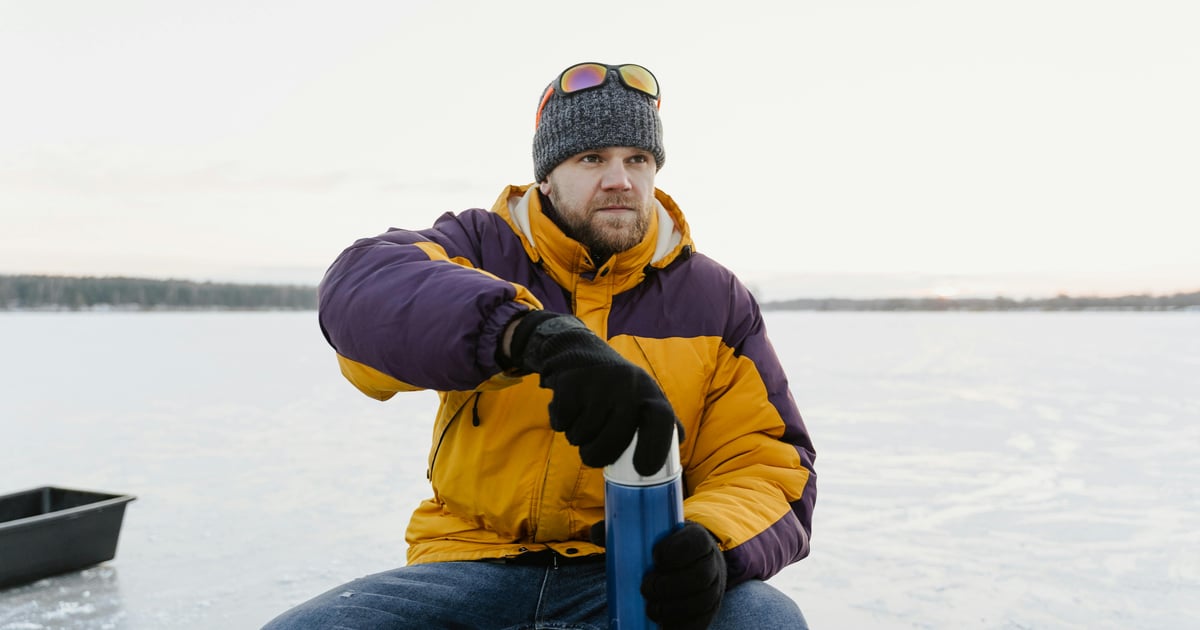
A cold-weather base layer is the piece sitting directly against your skin when temperatures drop. It is the foundation the rest of the system depends on. Get it wrong and no amount of down, fleece, or Gore-Tex above it will save you. Get it right and you can hike Patagonian passes, stand on subway platforms in Helsinki, or watch glaciers calve in Alaska without ever feeling genuinely cold.
After a decade of testing base layers across Iceland, the Alps, Hokkaido, and the European Alps in winter, we have landed on five that we keep returning to. Each has a clear use case. None is a compromise pick. This roundup breaks them down across the two variables that matter — fabric (merino versus synthetic) and weight (150, 200, 250+) — and maps each pick to the traveler and climate it serves best.
For the fundamentals of how base layers fit into a broader cold-weather system, our complete guide to layering covers the three-layer theory in depth. For the merino-versus-synthetic debate specifically, see our merino wool vs synthetic guide.
How we think about base layer weight
Base layer fabrics are measured in grams per square meter (gsm), and that number tells you almost everything about how the layer will perform:
- 150 gsm: Lightweight. For hot-to-mild climates, high-output activities, and as a summer standalone. Too thin for most cold-weather primary use.
- 200 gsm: Midweight. The versatile default. Works from about 50°F down to 20°F when paired with appropriate mid and outer layers. This is what most travelers should buy first.
- 250 gsm and up: Heavyweight. For sustained sub-20°F conditions, sub-arctic travel, and low-output activity where you are not generating enough body heat to stay warm in a thinner layer.
Most travelers over-buy on weight. A 200 gsm merino crew plus a proper insulated mid layer handles Iceland in winter. Reserve 250+ for trips where you expect to be outside in the cold for hours at a time without a lot of activity.
Fit matters as much as weight
Base layers need to sit next-to-skin. A baggy merino tee traps cold air against your torso and defeats the whole point of wicking moisture off your skin. Look for a fit that is snug but not compressive — you should be able to pinch a quarter-inch of fabric away from your chest or back. Too tight and you will feel constrained in the mid layer; too loose and the fabric will not wick.
Sleeve length matters too. Full-coverage crew-neck long-sleeves are the workhorse silhouette. Quarter-zips add a temperature vent without committing to a jacket. Short-sleeve base layers are useful under a long-sleeve mid layer in variable temperatures.
Merino versus synthetic
The honest answer: both work, and the right choice depends on your trip profile.
Merino wins when: You want to go multi-day without washing, you want a single layer that works across a wide temperature range, odor matters (shared accommodations, business travel, backpacking), and you value the natural feel against skin.
Synthetic wins when: You are doing high-output activity in cold-but-wet conditions, budget matters, you expect to wash frequently, or you want a layer that dries in under an hour instead of three to six.
Most travelers end up owning one of each — a merino for everyday use and a synthetic for hard-sweat days. If you can only buy one, buy merino in 200 gsm.
The 5 best cold-weather base layers
1. Smartwool Merino 250 Baselayer — The cold-weather standard
Fabric: 100% merino wool, 250 gsm Best for: Sub-freezing conditions, low-to-moderate output, all-day cold-weather wear Weight: ~11 oz (310 g)
If a cold-weather base layer has a default setting, this is it. Smartwool’s 250 gsm construction is dense enough to work as standalone warmth in 40°F indoor environments and layered enough to handle sub-10°F with a down jacket over it. The fabric is cut slightly generously — not baggy, but not the compression-fit some competitors use. Over several seasons of testing in Alpine and Nordic conditions, the 250 holds up against abrasion from pack straps better than lighter weights.
The trade-off: at 250 gsm, it is too warm for shoulder-season use and for high-output activity. Running or skinning uphill in this layer will leave you soaked. For that reason we do not recommend it as a first base layer for a general-purpose traveler — buy 200 gsm first, then add the 250 when you specifically need more warmth.
Who should buy: Travelers heading to Iceland in winter, Lapland, Hokkaido winter trips, or anywhere else sustained sub-freezing temperatures are the norm.
2. Icebreaker 200 Oasis Long Sleeve Crewe — The versatile midweight
Fabric: 100% merino wool, 200 gsm Best for: Mixed temperature ranges from 20°F to 55°F, travel across climate zones Weight: ~8 oz (225 g)
If you can only own one cold-weather base layer, make it this one. The Icebreaker 200 Oasis has been the reference midweight merino crew for more than a decade, and nothing else has quite displaced it. At 200 gsm, it is warm enough for sub-freezing with a proper mid layer and thin enough that you can hike uphill without overheating. The fit is cut slim without being compressive, with long sleeves, a high crew neck that works under a scarf, and flat seams that do not rub under pack straps.
The fabric pills slightly over years of hard use — a universal merino trait — but holds shape and color better than most. Expect 3-5 seasons of regular travel use from a single unit.
Who should buy: Nearly everyone. This is the default pick for a single-base-layer traveler heading anywhere from European winter cities to shoulder-season Patagonia to North American ski trips.
3. Patagonia Capilene Midweight Crew — The synthetic workhorse
Fabric: 100% recycled polyester (Polygiene-treated), ~180 gsm equivalent Best for: High-output cold-weather activity, wet conditions, budget-conscious buyers Weight: ~7 oz (200 g)
Capilene is Patagonia’s synthetic base-layer line, and the midweight sits in the same temperature range as a 200 gsm merino but with a different personality. The fabric dries in about a third of the time merino takes — an hour versus three — which matters if you are cycling wet-then-dry hiking days without access to a dryer. It also handles hard-sweat output better; merino can get slow-wicking and clammy during sustained high exertion, while Capilene keeps moving moisture out.
The trade-offs: synthetic picks up body odor fast, even with Polygiene antimicrobial treatment. You will be washing this every 2-3 wears, not every 5-7 like merino. And the feel against skin is slicker, more technical — it does not have the natural warmth of wool.
Who should buy: Travelers doing a lot of high-output activity (ski touring, winter backpacking, trail running) where merino’s slow drying becomes a liability. Also the budget pick — Capilene runs roughly two-thirds the price of equivalent merino.
4. REI Co-op Midweight Base Layer — The best value
Fabric: Merino-synthetic blend (typically 50/50), midweight Best for: First-time base layer buyers, occasional cold-weather travelers, budget trips Weight: ~9 oz (255 g)
REI Co-op’s house-brand midweight base layer punches well above its price. The merino-poly blend captures about 80% of pure merino’s warmth and odor-resistance benefits for around half the price of Smartwool or Icebreaker. The synthetic content adds durability — this is a layer that survives being machine-washed weekly without shrinking or pilling the way pure merino sometimes does.
What you give up: pure merino’s edge in odor resistance over long multi-day use. Where a 100% merino 200 gsm layer can go 5-7 days between washes, this blend starts to smell around day 3. For most travel use that is fine. For backcountry trekking where washing is not an option, buy the pure merino.
Who should buy: Travelers who want merino benefits without the premium price, anyone buying their first cold-weather base layer, families outfitting multiple people.
5. Minus33 Merino Chocorua Midweight — Premium merino value
Fabric: 100% merino wool, ~230 gsm Best for: Buyers who want pure merino without the premium-brand markup Weight: ~10 oz (285 g)
Minus33 is the value-merino brand that consistently outperforms its price point. The Chocorua Midweight uses 18.5-micron merino — slightly coarser than Icebreaker’s 17.5 micron, which means marginally less soft next to skin but also better durability and a lower price. At about 230 gsm, it sits between the Smartwool 250 and the Icebreaker 200 in warmth, covering a useful sweet spot for travelers who want a single layer to handle most cold-weather scenarios.
The fit runs slightly boxy compared to Icebreaker or Smartwool — size down if you are between sizes and want a true next-to-skin fit. Construction quality is solid: flatlock seams, reinforced cuffs, no itchy tags. Over multiple seasons of use, the fabric holds up well against pack abrasion.
Who should buy: Travelers who want 100% merino at the best price, buyers who find premium-brand markups hard to justify, anyone outfitting multiple layers for a family.
Head-to-head quick reference
| Base layer | Fabric | Weight (gsm) | Best use case | Price range |
|---|---|---|---|---|
| Smartwool Merino 250 | Pure merino | 250 | Sustained cold, -5°F to 30°F | Premium |
| Icebreaker 200 Oasis | Pure merino | 200 | Versatile default, 20°F to 55°F | Premium |
| Patagonia Capilene Midweight | Synthetic | ~180 | Wet, high-output cold | Mid |
| REI Co-op Midweight | Merino blend | Midweight | Value pick, mixed conditions | Budget |
| Minus33 Chocorua Midweight | Pure merino | ~230 | Value merino, all-purpose | Mid |
How many base layers to pack
For a 10-14 day cold-weather trip, pack 2-3 tops and 1-2 bottoms. Merino’s 3-5 day wear capacity is what makes this workable — you are not packing one layer per day. Rotate one while another airs out or dries from a sink wash. For care specifics, see our caring for merino wool guide.
On trips where you can do laundry midway, 2 tops is enough. On trips where you cannot, 3 tops gives you a buffer if one gets soaked and needs a full air-dry cycle.
Fit and sizing guidance
Ordering a base layer online is harder than ordering a regular t-shirt because the next-to-skin fit matters so much. A few reliable rules:
True to size is the right call for merino. Merino does not stretch much over time and does not shrink meaningfully if you follow care instructions. Your normal t-shirt size in the brand you are buying will be correct 90% of the time.
Size down for synthetic base layers. Synthetic fabrics (Capilene, polyester blends) are cut slightly loose by default to account for movement. If you want true next-to-skin contact for best wicking performance, size down one.
Check the sleeve length. Base layers are useless if the sleeves pull up from your wrists inside a jacket. Look for sleeves that reach the base of your thumb or include a thumb-hole loop. Most travel-oriented brands cut sleeves slightly long for this reason.
Torso length matters for tucking. If you plan to tuck the base layer into your pants for warmth (which you should in sub-freezing conditions), buy a layer with enough torso length to stay tucked when you raise your arms. Short torso lengths come untucked and let cold air against your lower back.
Travel-specific layering combinations
The base layer is one-third of a system. How it combines with the rest of your cold-weather wardrobe determines how it actually performs:
Base + fleece + shell: The mild-cold default. Works from 35°F to 55°F for moderate activity. Base layer wicks, fleece insulates, shell blocks wind. Pack all three for any cold-weather trip and you have the foundation.
Base + down jacket + shell: The standing-around cold setup. Works from 20°F down to about 0°F when you are not generating much body heat. The down jacket provides loft insulation; the shell protects the down from wind and moisture.
Base + fleece + down jacket + shell: The full winter rig. Handles sustained sub-freezing with occasional activity bursts. This is what you wear on a chairlift or standing at a northern lights viewpoint in January.
Base alone: The high-output option. Skinning uphill, hiking with a heavy pack, or trail running in cool weather. A 150-200 gsm base layer alone can be surprisingly warm when you are generating heat.
The base layer that works best for you depends on which of these combinations you expect to use most. High-output travelers want lighter weights (150-200 gsm) that can stand alone. Standing-around-cold travelers want heavier weights (250+ gsm) that work well under the down jacket.
Why cotton is the wrong answer
A lot of first-time cold-weather travelers default to cotton thermals because that is what they grew up wearing. This is the single biggest mistake in cold-weather packing, and it merits direct mention.
Cotton absorbs 27 times its weight in water. Once a cotton base layer gets damp — from sweat, from rain sneaking in at the collar, from snow that melts on contact — it stops insulating and starts actively pulling heat off your body. Wet cotton at 40°F is colder than no base layer at all. In sustained sub-freezing conditions, wet cotton is a hypothermia risk.
Every fabric in this roundup solves this problem. Merino retains most of its insulation value when damp; synthetics wick moisture through the fabric and continue insulating. The extra $50 to $100 over a cotton thermal pays for itself the first time you get caught in weather.
Related reading
- Why merino wool for travel
- Merino wool vs synthetic
- Complete guide to layering
- Best merino wool t-shirts
- Packing for Iceland
- Packing for European winter
FAQ
What weight base layer should I buy first?
A 200 gsm midweight in merino. This is the single most versatile cold-weather layer — warm enough for sub-freezing with proper outer layers, thin enough to avoid overheating during activity, and appropriate for trips from 20°F to 55°F. Start with the Icebreaker 200 Oasis or the Minus33 Chocorua.
Can I wear a merino base layer as a regular shirt?
Yes — that is one of merino’s biggest advantages over synthetic. A 150-200 gsm merino crew looks and feels like a normal long-sleeve shirt, not a technical garment. You can wear it around a hotel, out to dinner, or under a button-down without it reading as athletic apparel.
How often should I wash a merino base layer?
Every 5-7 wears for normal travel use, more frequently for heavy-sweat activity. Air between wears, spot-clean stains as they happen, and do a full sink wash when it starts to feel dirty or hold odor. Over-washing is the biggest cause of premature merino wear.
Is a merino-synthetic blend worth considering?
Yes, especially for budget-conscious or first-time buyers. Blends (typically 50/50 or 87/13 merino/nylon) capture 75-85% of pure merino’s benefits at 60-70% of the price, with added durability from the synthetic fiber. The REI Co-op Midweight above is the strongest example. For hardcore multi-day trekking where odor resistance is critical, pure merino still wins — but for most travelers, a blend is plenty.
Do I need separate base layers for top and bottom?
For sub-30°F travel, yes. Cold legs get cold legs quickly and a merino bottom under your hiking pants or travel pants makes a bigger comfort difference than adding another top layer. For 30°F and warmer, base layer bottoms are optional — most travelers skip them.
How long will a merino base layer last?
With moderate travel use (30-50 wears per year) and proper care, a quality merino base layer lasts 3-5 years before showing meaningful wear. Premium brands (Smartwool, Icebreaker) tend to edge out budget brands in year-three durability. Synthetic base layers typically outlast merino by 1-2 years but wear out in different ways — the fabric stays intact but elasticity and odor-resistance degrade.