Visiting religious sites while traveling is one of the more rewarding — and more responsibility-laden — things a traveler does. You are a guest in a place that is actively sacred to people who are not you, and the local community extends significant hospitality in allowing outside visitors at all. Dressing appropriately is the most visible signal that you understand and respect that.
The good news: meeting dress codes at most religious sites is simpler than it seems. A few basic principles cover most religions, and a small amount of packed fabric can adapt a casual travel outfit to religious-appropriate instantly. This guide walks through the specifics by religion and region, plus what to carry and how to approach the broader question of cultural sensitivity.
A note on authority: this article reflects standard travel etiquette guidance from religious authorities, cultural institutions, and travel communities. Rules vary by specific site, sect, and community — when in doubt, observe what locals are wearing, follow posted signs, and ask a local guide. This is general guidance, not a substitute for specific site research.
The universal principles
Across nearly all religious traditions, four principles cover the core expectations:
- Cover shoulders. Sleeveless tops are inappropriate at the majority of religious sites worldwide. Short sleeves are usually fine; sleeveless, strappy, or bare-shoulder is usually not.
- Cover knees. Shorts above the knee, short skirts, and cropped pants below knee level are problematic at most sites. Pants, long skirts, or knee-length dresses are the standard.
- Remove shoes where required. Most Buddhist, Hindu, and some Muslim sites require bare feet or socks inside. Wear shoes that are easy to slip on and off.
- Dress modestly in general. Avoid tight, revealing, or attention-grabbing clothing. Loud graphics, profanity, and skintight silhouettes are inappropriate even if technically covered.
These four principles get you through 80% of religious sites worldwide. The remaining 20% involves religion-specific or region-specific details.
Buddhist temples in Southeast Asia (Thailand, Cambodia, Myanmar, Laos, Vietnam)
Thailand’s Grand Palace in Bangkok is the strictest commonly-visited Buddhist site. Cambodia’s Angkor Wat and Myanmar’s Shwedagon Pagoda are close seconds.
Requirements:
- Shoulders covered. Short sleeves or long sleeves; no tank tops, no spaghetti straps.
- Knees covered. Pants, long skirts, or skirts/dresses well below the knee. Some sites specifically require pants rather than skirts.
- Shoes removed before entering the main prayer halls. Socks are usually fine; bare feet required at some sites.
- No hats inside prayer halls (removed on entry).
- Feet should not point toward Buddha statues. When sitting, tuck feet under or to the side — never point them at sacred imagery.
Additional notes:
- Women should not touch monks or pass items directly to them. Place items on a cloth or table.
- In Myanmar and strict Thai temples, women may be excluded from certain inner sanctums regardless of dress.
- Photography is often restricted. Always check and ask permission.
Packing: Lightweight long pants and a short-sleeve top meet the dress code and work for the tropical climate. A light scarf or sarong works as a last-minute cover-up if you forgot. Many Thai temples sell or loan sarongs at the entrance for under $5. For a full clothing breakdown for temple-heavy itineraries in this region, see our Southeast Asia packing guide.
Catholic churches in Europe (Italy, Spain, France, Portugal)
Rome’s St. Peter’s Basilica and the Vatican are strictly enforced. Milan’s Duomo, Barcelona’s Sagrada Família, and most major Italian and Spanish cathedrals also enforce dress codes — sometimes with guards turning away inappropriately dressed visitors.
Requirements:
- Shoulders covered. No tank tops, no sleeveless tops, no spaghetti straps. Short sleeves are acceptable.
- Knees covered. No shorts (on men or women), no short skirts or dresses.
- No hats inside (removed on entry, particularly for men).
- Quiet behavior, especially during services.
Additional notes:
- Italian and Spanish enforcement is strict at major sites — security will turn visitors away. Smaller parish churches are often more relaxed.
- A pashmina or large scarf can convert a sleeveless dress to compliant on entry. Many Italian cathedrals sell disposable wrap-skirts and shawls at the door.
- French cathedrals are often less strictly enforced but follow the same etiquette in principle.
Packing: A thin pashmina or large scarf is the universal Europe-church solution. It transforms a sleeveless summer dress into a modest outfit in seconds and packs into nothing. Women traveling Italy in summer should always carry one. For a complete clothing strategy for Italian summers that accounts for church visits, see our Italy summer packing guide.
Mosques in the Middle East, Turkey, and North Africa
Istanbul’s Blue Mosque, Dubai’s Sheikh Zayed Grand Mosque, Cairo’s Al-Azhar, and many others welcome non-Muslim visitors at designated times. Rules are stricter than Buddhist or Catholic sites.
Requirements for women:
- Head covered with a scarf (hijab-style). Some tourist-oriented mosques provide scarves at the entrance.
- Arms fully covered to the wrists. Long sleeves required, not short.
- Legs fully covered to the ankles. Pants, long skirts, or ankle-length dresses. Leggings under a tunic are usually acceptable.
- Loose-fitting clothing preferred. Tight yoga pants or form-fitting leggings, even if covering everything, may be refused at some sites.
Requirements for men:
- Long pants required. No shorts, even long ones.
- Shirt with sleeves (short or long). No tank tops.
- Head is typically uncovered (the reverse of some other traditions).
Everyone:
- Shoes removed before entering the prayer hall. Socks are usually fine.
- Quiet voice, no photography during prayer times.
- Avoid visiting during the five daily prayer times (check local schedule) unless you are there specifically to observe (some mosques welcome this; others do not).
- Menstruating women are traditionally asked not to enter prayer areas in more conservative mosques. This is a personal decision.
Regional variation:
- Turkey (especially Istanbul): Generally welcoming to tourists. Blue Mosque provides scarves and skirts at the entrance. Tourist-friendly infrastructure.
- UAE (Dubai, Abu Dhabi): Sheikh Zayed Grand Mosque in Abu Dhabi is famously tourist- friendly but enforces strict dress. Provides abayas for women at the entrance.
- Morocco: Most mosques are closed to non-Muslims entirely (notable exception: Hassan II Mosque in Casablanca). Dress modestly in general as a tourist out of respect.
- Egypt, Jordan, Oman: Mixed — some mosques welcome visitors, others do not. Research specific sites.
- Iran, Saudi Arabia: Dress codes extend beyond religious sites to public spaces. Research before travel.
Packing: For women traveling extensively in Muslim-majority countries, a large scarf, a long-sleeve tunic-length top, and loose-fitting ankle-length pants form a flexible kit. An abaya (full-length loose robe) is worth packing if visiting multiple mosques. For men, a pair of lightweight long pants and a short-sleeve collared shirt cover most contexts.
Hindu temples in India, Nepal, and Sri Lanka
Major sites include South India’s temple complexes (Madurai, Thanjavur), North India’s Varanasi temples, and Nepal’s Pashupatinath and Swayambhunath. Rules vary dramatically between “everyone welcome” tourist temples and “Hindus only” strict sites.
Requirements:
- Shoulders covered. Same principle as Buddhist and Catholic sites.
- Knees covered. Long pants, long skirts, or saris. Men often wear lungis at some temples.
- Shoes removed. Always. At some South Indian temples, even socks must be removed.
- Head coverings are required at some Sikh gurdwaras (not Hindu temples, but often confused — Sikh sites require head covering for everyone).
- Leather items (belts, wallets, bags) are prohibited at some strict temples. Cloth bags are the safest option.
Additional notes:
- Some South Indian temples require men to remove shirts entirely before entering the inner sanctum. Signs indicate this at the entrance.
- Menstruating women are traditionally asked not to enter some Hindu temples. Enforcement varies.
- Photography is often prohibited inside temples. Always check.
- Non-Hindus may be restricted from certain inner areas at orthodox temples (notably the main sanctum at Puri’s Jagannath Temple).
Packing: Lightweight long pants and long sleeves work for most temple visits and the Indian climate. A cotton scarf (dupatta) for women is widely useful and can be purchased cheaply locally. Avoid leather accessories at strict temple destinations.
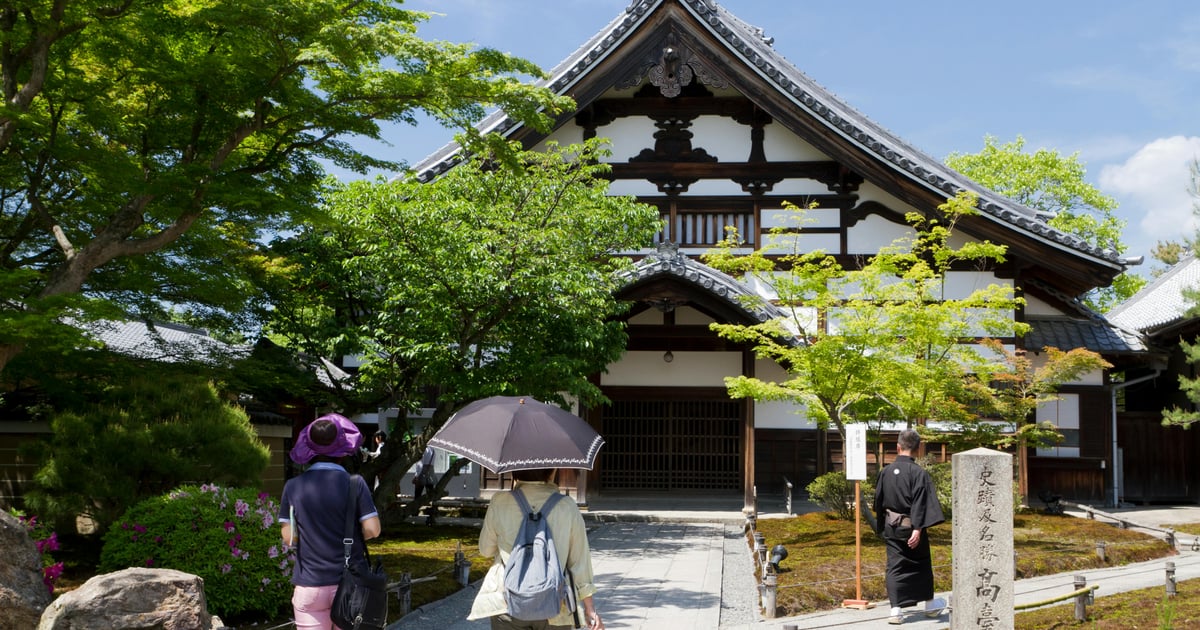
Shinto shrines and Buddhist temples in Japan
Japanese religious sites are generally the most relaxed on dress codes of the major traditions. Casual travel wear is almost always acceptable.
Requirements:
- No specific dress code at most sites. Casual Western attire is fine.
- Shoes removed before entering certain temple interiors (signed clearly). Sandals and slip-on shoes are useful.
- Quiet, respectful behavior is expected even without strict clothing rules.
- No eating, drinking, or loud conversation in shrine and temple grounds.
- Hats removed inside.
Shrine etiquette specifics:
- Bow at the torii gate on entering.
- Purify hands and mouth at the temizuya (water basin) before approaching the main hall.
- At the main hall: coin in the box, ring the bell, two bows, two claps, one bow.
- At Buddhist temples (Tera), quiet prayer without clapping.
Additional notes:
- Swimsuits, shorts, and tank tops are all fine at most Japanese religious sites from a rules perspective, but feel out of place in terms of atmosphere. Casual smart attire (the kind you would wear to a restaurant) fits better.
- For tea ceremony, formal events, or certain temples (some Kyoto meditation temples), more formal attire is expected.
- Torii-covered pathways like Fushimi Inari are outdoors and essentially casual.
Packing: Whatever you would wear for a city tour is fine. The Japan-specific packing addition is easy-to-remove shoes, since you will take them off frequently. For a full breakdown of what to bring for a Japan trip, see our Japan packing guide.
Cross-cultural principles beyond dress
Dress codes are the visible surface of cultural sensitivity. Several principles extend deeper:
Observe before acting
When arriving at any religious site, take a minute before entering. What are locals doing? Where are they walking? Where are they not walking? Which doors do they use? Copying local behavior is the safest approach when rules are unclear.
Treat sacred objects as sacred
Do not touch altars, statues, offerings, or ritual objects unless invited to. Do not climb on religious monuments for photos. Do not pose in disrespectful ways (fake meditation, straddling statues, etc.). These behaviors are widespread on social media and also widely offensive to local communities.
Photography rules vary
Some sites allow general photography but prohibit it inside specific areas. Some allow photos without flash. Some allow photos but not of worshippers. Some prohibit photography entirely. Always look for signs and ask if unclear. Photographing people praying or in devotional states is almost always inappropriate without explicit permission.
Timing matters
Visiting during active worship or prayer times is sometimes welcomed (as witness) and sometimes intrusive. Research specific sites. Catholic mass, Muslim prayers, Buddhist chanting, Hindu arti — each has different norms for outside observation.
Donations are appropriate but not required
Most religious sites accept donations. This is not a toll or entrance fee; it is a cultural gesture of appreciation. A small offering in the donation box is appropriate at most sites. Large, ostentatious donations for the sake of being seen are not.
Modesty beyond the minimum
The dress codes in this article are minimum thresholds. Dressing slightly more modestly than strictly required is rarely wrong and often appreciated — it signals that you are aware of and engaging respectfully with the tradition, not just complying to gain entry.
What to carry as a cover-up
The single most useful religious-site garment is a large scarf or pashmina. A single 60”×30” scarf covers:
- Shoulders (for Catholic churches, Buddhist temples)
- Head (for mosques)
- Legs (tied as a wrap for unexpectedly-short-skirt situations)
- Bare arms (draped)
- Cold blast from air conditioning (unrelated travel benefit)
Merino, cotton, or silk-cotton scarves in a medium weight work for all of these. A packable lightweight scarf weighs 3-5 oz and takes up negligible pack space.
Secondary cover-up options:
- Sarong (for Southeast Asia, especially pool-to-temple transitions).
- Long-sleeve merino cardigan (dual-purpose as layer and cover-up).
- Full-length lightweight pants rolled into a compact bag (for shorts-to-temple transitions).
- A versatile travel dress that covers shoulders and knees without additional wraps — see our best travel dresses guide for options that work across religious and casual contexts.
Packing recommendations for a religious-site-heavy trip
If your itinerary includes multiple religious sites (common in Southeast Asia, India, Turkey, Italy), pack with these in mind from the start:
- 1 pair of lightweight long pants. Linen, light merino, or breathable travel pants work across temples and climate.
- 1-2 short-sleeve or long-sleeve tops that cover shoulders.
- 1 large scarf or pashmina. Multi-use.
- 1 pair of easy-on/easy-off shoes. Slip-ons or sandals with a single strap.
- 1 lightweight bag without leather detailing (for temples prohibiting leather).
- Modesty swimwear (rash guard plus swim leggings) if beach + religious sites mix in one trip.
This kit weighs under 2 lbs and covers religious dress codes across most world religions.
FAQ
What if I forget and arrive dressed inappropriately?
Most major tourist-oriented religious sites provide or rent cover-ups. The Vatican, Blue Mosque, Sheikh Zayed Mosque, and Grand Palace Bangkok all have rental sarongs, scarves, or wraps. Smaller sites may not — in which case you may be denied entry and need to come back later. Carry a scarf to avoid this entirely.
Are leggings appropriate for religious sites?
Depends on the site and what is worn over them. Leggings alone (with a short top) are usually inappropriate — too form-fitting. Leggings under a tunic, long shirt, or long cardigan that covers the hips and upper thighs are usually fine. For specific guidance on travel leggings, see our best travel leggings guide.
Can I visit religious sites if I am not religious?
In almost all cases, yes. Tourist visitation is normal and welcomed at major sites across traditions. The expectation is respectful behavior, not religious identity. Exceptions exist — some strict temples and certain areas within sites are closed to non-adherents — but these are signed and the default assumption is that tourists are welcome.
What about tattoos? I have visible religious imagery tattooed that is not from my faith.
For visible tattoos featuring religious imagery from the faith being visited (Buddha in Thailand, Hindu deities in India), this can cause offense. Cover tattoos with long sleeves or clothing when visiting the relevant religious sites. Sri Lanka and Myanmar have in the past detained or deported tourists with visible Buddha tattoos — research before travel.
Are religious dress codes enforced consistently for men vs women?
No. Women face stricter rules at most religious sites globally. Head coverings, full-length clothing, and specific modesty expectations apply to women more often than men. This reflects the traditions’ own norms and is not something to argue with at the door. Comply while visiting; advocate on policy at home if you feel strongly.
Final thoughts
Dressing for religious sites is not a test you pass or fail — it is an act of hospitality extended from you to the community hosting you. The practical requirements are simple (cover shoulders, cover knees, remove shoes, carry a scarf), and the deeper principle is harder but more important: approach sacred spaces as a guest, not as a consumer. The communities you visit have extended significant generosity in allowing outsiders into their sacred spaces at all. Reciprocating that generosity with thoughtful dress and respectful behavior is the least a visitor can offer, and the most that is typically asked in return.