There is a moment on every trip when you realize you packed wrong. Maybe it happens at a temple in Kyoto where your only remaining clean top is a bright tank top and you need covered shoulders. Maybe it is at a rooftop bar in Lisbon where your entire wardrobe screams “I hiked here.” Or maybe it happens at the baggage carousel, watching your suitcase not appear, knowing everything you own for the next two weeks is somewhere over the Atlantic.
One-bag travel solves the last problem completely and the first two problems if you get the formula right. Most packing guides hand you a list — three shirts, two pants, one jacket — without explaining why those numbers work or how to adjust them when the trip changes. What you need is not a list but a ratio: a system that scales up or down depending on your bag size, your climate, and your tolerance for sink laundry.
After years of refining this, we have landed on a core formula. It is not magic. It is math — the math of outfit combinations, fabric performance, and diminishing returns.
The Core Formula: 3-2-1-1
The base ratio for a one-bag capsule wardrobe is:
- 3 tops (two short-sleeve, one long-sleeve or collared)
- 2 bottoms (one casual, one versatile enough for slightly dressier settings)
- 1 outer layer (climate-dependent)
- 1 base layer or extra mid-layer (if the climate demands it)
With three tops and two bottoms, you have six outfit combinations before you touch your outer layer. Add the layer and you double it to twelve visual variations. That is enough for most trips of any length, because the real variable is not how many days you are gone — it is how many days between washes.
Three tops is the key number. With performance fabrics, each top handles two to three days of wear before it needs a wash. Three tops gives you six to nine days of wear, covering the gap between laundry days on almost any trip. Two tops leaves no margin: if one is drying, you are down to a single option. Four tops adds only two more combinations while eating significant pack space. Three is the sweet spot.
For more on building a broader travel wardrobe — including footwear and accessories — see our guide to building a 10-piece travel wardrobe guide.
The Multiplier Effect
Every item you add to a capsule wardrobe does not create one more outfit. It multiplies across everything it pairs with.
How the math works
| Tops | Bottoms | Combinations |
|---|---|---|
| 2 | 1 | 2 |
| 3 | 1 | 3 |
| 3 | 2 | 6 |
| 4 | 2 | 8 |
| 4 | 3 | 12 |
| 5 | 3 | 15 |
Adding a third bottom to a 3-top wardrobe takes you from 6 to 9 combinations — a 50% increase for one item. But adding a fourth top to a 3-top, 2-bottom wardrobe takes you from 6 to 8. Same one item added, smaller percentage gain. The multiplier is strongest when you add to the smaller category.
This is why the formula favors more tops than bottoms. Tops are lighter, pack smaller, and are the piece people notice. A fresh shirt with yesterday’s pants reads as a new outfit. Yesterday’s shirt with fresh pants reads as yesterday’s outfit.
The diminishing returns wall
Beyond about 5 tops and 3 bottoms (15 combinations), you have more daily outfits than most people can distinguish. You are no longer solving a wardrobe problem — you are just filling a bag.
The sweet spot for most one-bag travelers is between the minimum formula (3-2) and the comfort ceiling (5-3). Where you land depends on your bag size.
Scaling the Formula by Bag Size
The formula adapts to three common one-bag sizes. The ratio stays the same — what changes is how many extras and layers you can afford.
25L Personal Item (Under-Seat Bag)
Best for: Weekend trips, warm-climate getaways, business overnights
The build:
- 2 tops (both merino or performance blend)
- 1 bottom (versatile enough for everything)
- 1 packable outer layer (rain shell or lightweight down)
- 3 pairs underwear
- 2 pairs socks
- 1 pair shoes (worn, not packed)
At 25L you are operating at the absolute minimum. Every item must do double duty — your single pair of bottoms needs to work at a restaurant and on a walking tour, and your tops need to handle two to three days each without washing. Cotton is not an option here.
A merino wool tee and a merino or tencel blend long-sleeve cover most situations. For bottoms, a pair of travel pants in a four-way stretch nylon blend (Bluffworks, Western Rise, or similar) bridges the gap between hiking trail and dinner table. Your outer layer should be a packable rain jacket that compresses to fist-size — see our picks for best packable rain jackets guide.
Total packed clothing weight: Roughly 1.5 to 2 kg (3.3 to 4.4 lb)
35L Standard Carry-On Backpack
Best for: One to two-week trips, multi-climate itineraries, trips mixing city and nature
The build:
- 3 tops (two merino tees, one collared or long-sleeve)
- 2 bottoms (one pant, one short or skirt depending on climate)
- 1 mid-layer (merino hoodie, light fleece, or packable down)
- 1 outer layer (rain shell)
- 4 pairs underwear
- 3 pairs socks
- 1 pair shoes (worn), 1 pair lightweight sandals (packed)
This is the Goldilocks size for most one-bag travelers. The 35L bag — an Osprey Farpoint/Fairview 36, a Tortuga Outbreaker 35, a Peak Design Travel Backpack — gives you the full 3-2-1-1 formula with room for toiletries, tech, and trip-specific extras.
With two merino tees and one collared shirt or long-sleeve henley, you can handle anything from a temple visit to a casual dinner. The second bottom adds a casual option — shorts for warm climates, a lighter pant or skirt for versatility.
The mid-layer makes multi-climate trips possible. A packable down jacket compresses to almost nothing and covers you down to about 5 degrees Celsius with a base layer underneath — see our guide to best packable down jackets guide. For a deep dive on layering systems, check out complete guide to layering.
Total packed clothing weight: Roughly 2.5 to 3.5 kg (5.5 to 7.7 lb)
45L Maximum Carry-On
Best for: Extended trips (three weeks or more), cold-climate travel, trips requiring formal or specialized clothing
The build:
- 4–5 tops (two merino tees, one long-sleeve, one collared/button-down, one optional activewear top)
- 3 bottoms (one versatile pant, one casual pant or short, one dressier option or legging)
- 1 mid-layer (packable down or fleece)
- 1 outer layer (rain shell or insulated jacket depending on climate)
- 5 pairs underwear
- 3–4 pairs socks
- 1 pair shoes (worn), 1 pair packed shoes or sandals
At 45L you are at the maximum most airlines accept as a carry-on. The extra 10L over a 35L bag buys you comfort and specialization — a dedicated workout top, a nicer shirt for going out, a third bottom for freer rotation between laundry days.
But be careful. This is where diminishing returns hit hardest. That fifth top takes you from 12 to 15 combinations with three bottoms — a gain you will rarely notice. Pack it if it weighs nothing (a 100g merino tee) but do not sacrifice space for a heavy piece that adds marginal versatility.
Total packed clothing weight: Roughly 3.5 to 5 kg (7.7 to 11 lb)
Climate Adaptations
The 3-2-1-1 base formula holds across climates. What changes is the weight and type of each piece.
Warm and Humid (Southeast Asia, Caribbean, Central America)
- Tops: Lightweight merino (150 gsm or under) or merino-synthetic blends. Quick-dry is essential; odor resistance is critical in humidity. See best merino wool t-shirts guide for options tested in tropical conditions.
- Bottoms: Lightweight nylon or nylon-spandex blend. Aim for under 200g per pair. One convertible pant-to-short option can replace a separate short.
- Outer layer: An ultralight packable rain shell (under 200g) is non-negotiable in tropical climates. Skip insulation entirely.
- Skip the mid-layer. You will not need it. Use the freed space for an extra top instead.
Temperate (Western Europe, Japan spring/fall, Pacific Northwest)
- Tops: Standard merino (180–200 gsm). One long-sleeve merino doubles as a light layer.
- Bottoms: Medium-weight travel pants with some stretch. A second bottom in a slightly dressier fabric covers nicer restaurants.
- Outer layer: A rain shell is still the primary outer layer, but choose one with enough room to layer a fleece underneath.
- Mid-layer: A lightweight fleece or merino hoodie bridges the gap between shirt and shell on cool mornings and evenings.
Cold (Northern Europe winter, Iceland, Patagonia)
- Tops: Heavyweight merino base layer (250 gsm) plus a mid-weight merino tee for indoor wear. The base layer lives on your body most of the time; the tee is for heated interiors.
- Bottoms: Heavyweight travel pants (ideally wind-resistant). Consider merino leggings as a base layer underneath — they add almost no pack volume.
- Outer layer: This is where you spend your volume budget. A packable down jacket under a waterproof shell gives you a system that handles well below freezing. See best packable down jackets guide.
- Mid-layer required. A heavy fleece or wool sweater is not optional. This is the piece that makes your system work in genuinely cold weather.
For a full breakdown of how fabrics perform across different conditions, see our travel fabrics guide guide.
Business or Smart-Casual
- Tops: Swap one merino tee for a wrinkle-resistant button-down (Ministry of Supply, Bluffworks, or Wool & Prince). Keep at least one merino tee for off-duty wear.
- Bottoms: Wrinkle-free chinos or dress pants as your primary bottom. A pair of dark, slim travel pants that read as casual trousers handles the second slot.
- Outer layer: A travel blazer (unstructured, packable) replaces the fleece mid-layer if you need to look professional.
Fabric Requirements by Category
In a capsule wardrobe where every piece must perform, fabric choice is the difference between a system that works and a pile of clothes that happens to fit in a backpack. For a complete primer, start with travel fabrics guide and our breakdown of merino wool vs synthetic guide.
Tops
- Primary fabric: Merino wool (17.5–19.5 micron, 150–200 gsm depending on climate). Merino earns its place through odor resistance — the single most important property in a capsule wardrobe where you are wearing each top multiple days.
- Alternative: Merino-synthetic blends (70/30 or 80/20 merino-nylon) for better durability at a slight cost to odor performance.
- Avoid: 100% polyester unless treated with silver-ion or similar antimicrobial. Untreated poly starts smelling by day two in warm conditions.
Bottoms
- Primary fabric: Nylon-spandex blend (90/10 or similar) with DWR finish. Look for four-way stretch, quick-dry under four hours, and a fabric weight between 150–250 gsm.
- Key properties: Wrinkle resistance (you will be sitting on planes, trains, and bus seats), stain resistance (DWR helps here), and a cut that does not scream “tactical pants.”
- Avoid: Cotton denim. Jeans are the heaviest, slowest-drying, least versatile item you can pack. One pair of jeans weighs as much as two or three pairs of performance travel pants.
Underwear and Socks
- Underwear: Merino wool or merino blend. Three to four pairs with sink-washing rotation is enough for any trip length. See our picks for best travel underwear for men and best travel underwear for women.
- Socks: Merino wool, light or medium cushion depending on your footwear. Two to three pairs minimum. Merino socks handle two to three days between washes without odor issues. See best travel socks guide.
Outer Layers
- Rain shell: Look for 2.5-layer or 3-layer waterproof breathable fabric (Gore-Tex Paclite, Pertex Shield, or similar). Weight target: under 300g for warm climates, under 400g for temperate.
- Insulation: 650-fill-power down or higher for the best warmth-to-weight ratio. Synthetic fill (PrimaLoft, Climashield) for sustained wet conditions. See best packable down jackets guide.
Pro Tips
Wear your heaviest items on the plane. Your outer layer, your heaviest shoes, and your bulkiest pants should be on your body at the gate, not in your bag. This alone can free up 20 to 30 percent of your pack volume.
Color-coordinate ruthlessly. Every top should work with every bottom. This means sticking to a palette of two or three neutral base colors (black, navy, gray, olive, khaki) with at most one accent color. If a shirt only matches one pair of pants, it does not belong in a capsule wardrobe.
Pack cubes are not optional. Compression packing cubes turn a 35L bag into what feels like 40L. More importantly, they keep your capsule wardrobe organized so you are not digging past a rain shell to find a clean tee at the bottom. See our guide to best packing cubes guide.
Sink-wash on day three, not day five. Do not wait until everything is dirty. Wash one or two items every second or third night while you still have clean options available. A merino tee washed in a hotel sink with a drop of travel detergent dries overnight in most climates.
Test your capsule at home first. Wear only your travel wardrobe for five consecutive days before your trip. You will discover gaps, redundancies, and comfort issues before they matter. Write the results down on the printable Capsule Travel Wardrobe Planner — it has the outfit-combination math and a fabric check for every core piece.
One spare set of underwear and socks goes in your personal item or daypack. If your main bag is delayed or stuck in a hostel locker, having a fresh base layer on your person is worth more than an extra shirt in your pack.
What to Skip
Cotton t-shirts. Cotton absorbs moisture, dries slowly, wrinkles badly, and starts smelling after a single day of warm-weather wear. A cotton tee performs worse than merino in every metric that matters for travel.
“Just in case” formal wear. That blazer or cocktail dress you pack for the one night you might go somewhere nice almost always stays in the bag. If a formal occasion arises, buy something locally or hand-wash your best-looking travel pieces.
Bulky sweaters or hoodies in non-technical fabrics. A chunky knit sweater takes up the same volume as an entire second outfit. Replace it with a merino mid-layer or packable fleece at a fraction of the size.
More than two pairs of shoes. Footwear is the biggest volume thief in any bag. Wear one pair, pack one pair (lightweight sandals or minimal flats).
Single-use specialty items. A swimsuit is the rare exception — it packs tiny and cannot be replaced. But a dedicated “lounging” outfit, a “hiking-only” shirt, or a “sleeping tee” do not earn their space. Every piece should serve at least two contexts.
For a broader look at packing mistakes, see our guide to one-bag packing list.
FAQ
How long of a trip can a one-bag capsule wardrobe support?
Any length. The capsule wardrobe is not designed around trip duration — it is designed around laundry frequency. With three merino tops getting two to three wears each, you have six to nine days between full laundry sessions. Whether your trip is ten days or ten weeks, the wash cycle stays the same.
Do I really need merino wool, or can I use cheaper synthetics?
You can build a functional capsule with synthetics, but you will wash more frequently. Merino’s odor resistance lets you wear a shirt for two to three days; most synthetics start developing noticeable odor by day two in warm weather. If you are comfortable washing daily, synthetics work. If you want multi-day wear from each piece, merino is worth the investment. We break down the trade-offs in merino wool vs synthetic guide.
What about laundry — do I need to plan for sink-washing?
Yes. Plan to wash tops every three to four days. The good news is that merino and quality synthetics dry fast — a merino tee washed in the evening and hung in an air-conditioned room is dry by morning. Pack a small bottle of concentrated travel detergent (Matador or Sea to Summit) or a few sheets of travel laundry soap.
How do I handle formal or dressy occasions with a capsule wardrobe?
Build one dressy combination into your baseline formula. A dark pair of wrinkle-resistant travel pants paired with a clean merino or tencel button-down reads as smart-casual in most settings worldwide. Add clean minimal shoes and you can handle any restaurant, theater, or business meeting that does not require a suit.
Is the formula different for men and women?
The ratio is the same. The specific pieces differ — women might swap one pair of pants for a travel dress or skirt that packs flat and adds visual variety without extra volume. Scarves and wraps also serve triple duty as warmth layers, modesty covers for religious sites, and style accents. The underlying math of combinations and fabric selection principles are identical.
Can I fit this wardrobe plus toiletries and tech in a single bag?
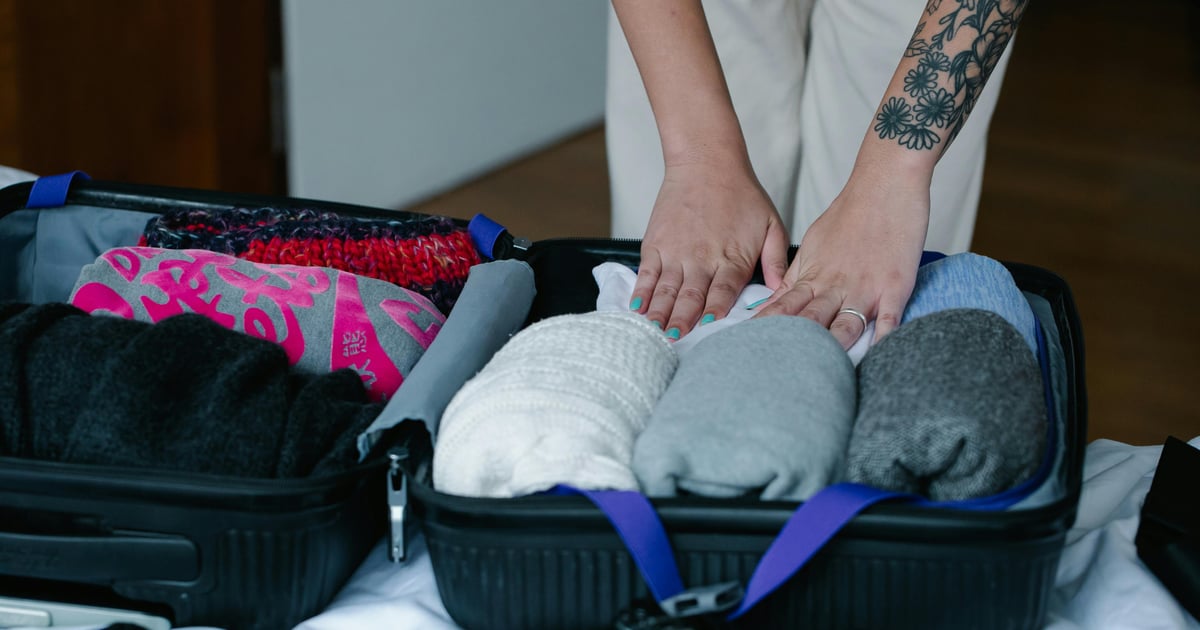
At 35L or above, yes. At 25L, it requires discipline. Clothing in the 3-2-1-1 formula typically occupies 40 to 50 percent of your bag volume when packed in compression cubes. That leaves space for toiletries, tech, and personal items. The key is compression cubes for clothing and a structured approach — rolling merino tees, folding stiffer pants, and stuffing your rain shell into dead space along the bag’s edges.
Putting It All Together
The one-bag capsule wardrobe is not about deprivation. It is about precision. The 3-2-1-1 formula gives you a reliable starting point, the multiplier math tells you where to add if you have room, and the diminishing returns principle tells you when to stop.
Start with the formula. Adapt it for your climate and trip type. Test it at home. Then walk past the check-in counter, through security, and straight to your gate with everything you need on your back.