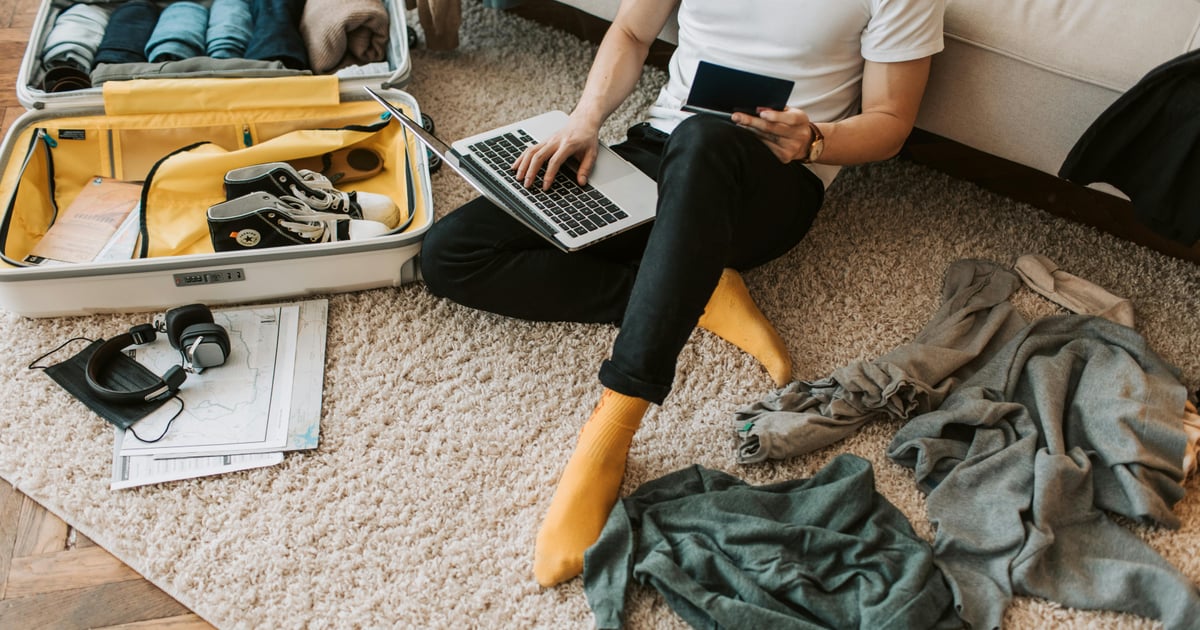
The clothes you do not pack matter more than the clothes you do. Every experienced traveler comes back from their first one-bag trip reporting the same thing: they wore about 60% of what they brought, never touched 40% of it, and wished they had packed a few specific things they forgot. Fixing that 40% — the stuff that ate pack space and earned nothing in return — is the fastest way to travel lighter without sacrificing anything.
This article is about the clothing you keep packing that you do not actually need. No abstract philosophy about minimalism, no judgmental tone. Just patterns most travelers fall into, the logic behind them, and what to leave home instead.
The “just in case” trap
The single biggest source of overpacking is the “what if” scenario. What if it rains more than forecast? What if there is a nice dinner? What if I need a second swimsuit? What if I get cold? These questions each add a piece of clothing to the bag. Ten what-ifs add ten pieces. Those ten pieces add 30% volume and 20% weight to an otherwise-optimized pack.
The fix is not ignoring what-ifs. It is assessing them honestly:
- Is this genuinely likely, or am I imagining a worst case? Rain in the tropics is common; snow in the tropics is not. Pack for likely weather; handle unlikely weather by buying locally if needed.
- Can one piece cover multiple what-ifs? A merino long-sleeve handles cold evenings AND nice restaurants AND temple visits AND long-haul flights. A packable rain jacket handles rain AND wind AND cold layering. Multi-purpose pieces kill multiple what-ifs at once.
- What would I do if I needed this item and did not have it? If the answer is “buy one,” then you do not need to pack it. Major cities have stores. A $30 emergency sweater in Lisbon beats carrying an unused sweater for two weeks.
- How often have I used this on past trips? Track actual use. Items you did not wear on your last three trips probably will not get worn on this one either.
Most travelers overweight low-probability scenarios. The rare “what if I need a blazer for a business meeting that came up unexpectedly” is cheaper and easier to solve at destination than to pack a blazer unused for a two-week leisure trip.
Cotton’s hidden costs
Cotton t-shirts are the single most over-packed item in travel luggage. They feel normal, they are cheap, and everyone owns plenty of them. So travelers pack five or six and call it a wardrobe.
The problem: cotton performs poorly for travel in ways that become obvious only after you are halfway through a trip. Cotton:
- Holds sweat and stays wet for hours, leading to clamminess in heat and cold-spots in cool weather.
- Wrinkles heavily and visibly, especially after packing.
- Holds odor aggressively once sweat-contaminated; one wear, one wash.
- Takes 8-14 hours to dry after washing — problematic for overnight hotel sink laundry.
- Fades and shrinks faster than technical fabrics.
The math: five cotton t-shirts for a seven-day trip at one-wear-per-shirt. Replace them with three merino t-shirts at three-wears-per-shirt. You save two pieces of pack space, avoid half the laundry, and arrive less wrinkled. See our best merino wool t-shirts guide for specific recommendations.
This is not an argument against owning cotton. It is an argument against packing cotton-heavy wardrobes for travel. Cotton is great for home wear and short trips with easy laundry access. It is wrong for one-bag, multi-day, or mixed-climate travel.
The same logic applies to cotton underwear (replace with merino or synthetic quick-dry) and cotton socks (replace with merino or synthetic blend). See our travel fabrics 101 guide for a full comparison.
Packing for the trip you wish you were taking
A common pattern: someone planning a two-week trip to Italy imagines themselves at a beachfront dinner in a flowy dress, at a rooftop aperitivo in a blazer, at a hill-town trattoria in a wine-colored silk top. The images are specific, the outfits are specific, and they all go into the suitcase.
The reality is usually: four days of walking museums and streets in variable weather, two beach days in beach clothes, one night at a nicer restaurant, seven days of casual dinner. The wine-silk top, the beachfront dress, and two of the three jackets never come out of the bag. For a realistic, itinerary-driven approach to beach trips, see our beach vacation packing list.
The fix is packing for your actual itinerary, not your imagined one:
- Map each day to a probable outfit. Day 1: arrival, casual. Day 2: walking museum, casual. Day 3: walking, casual. Day 4: beach, swimwear. Day 5: walking, casual. Day 6: nice dinner. Day 7: casual.
- Count how many “nice” occasions actually exist. Two? Pack one nice outfit. Five? Pack two nice outfits. Zero? Pack none.
- Separate daydream-outfits from use-outfits. The flowy beach dress is a beautiful image but may only get worn once. If it double-duties as a nice-dinner outfit too, keep it. If not, cut it.
- Notice patterns from past trips. What outfits got daily wear? Those are your real wardrobe.
This itinerary-first approach works for any trip type, including contexts where formal nights tempt heavy overpacking — see our cruise packing list for a concrete example.
This is the single largest category of cut-able clothing. Most overpacked suitcases contain two or three “aspirational” outfits that would have gotten left home by a more honest itinerary review.
Single-purpose items to leave home
Many items have one use. If that use does not match your actual travel, they are pure weight. Common offenders:
Dedicated workout clothing (unless you actually work out on trips)
“I might go to the hotel gym” rarely becomes reality during a packed tourist itinerary. Pack one dual-purpose outfit (a merino tee and travel pants work as pajamas, loungewear, AND low-intensity exercise wear) rather than a dedicated gym kit that stays in the bag.
Shoes for one specific context
A pair of heels for the “one nice dinner.” Hiking boots for the “maybe one day we’ll go hiking.” Flip-flops when you have walking sandals that work for the beach. Each extra pair of shoes costs 1-2 lbs of pack weight and significant volume. Aim for two pairs of shoes that cover every use (e.g., leather-look sneakers + leather sandals or loafers).
Heavy coats for mild weather
A wool peacoat weighs 3 lbs. A packable down jacket weighs 10-14 oz, compresses small, and layers with a rain shell for equivalent warmth. Unless you are traveling to a destination below 20°F consistently, a layered system is lighter and more flexible than a single heavy coat.
Sleepwear beyond one set
Most travelers pack two or three sets of pajamas. One is enough — wear them two nights, wash at the halfway point, wear again. Better yet: sleep in a merino tee and basic shorts or leggings that also work as lounge clothing, eliminating pajamas entirely.
Full-coverage “backup outfits”
Packing a backup outfit for every primary outfit is the logic of someone who expects spills or tears. It rarely happens. Pack for the wear you will get, not for two of everything.
Specialty clothing for hypothetical events
“What if we get invited to a local wedding?” “What if there’s a cave tour?” “What if we bike?” The answer for low-probability events is: rent or buy locally if it actually happens. For high-probability events, pack accordingly. Do not treat the question as 50/50 when it is actually 5/95.
How many of each item you actually need
This is the math that most travelers have never explicitly done. Concrete numbers for a 7-14 day trip:
Shirts/tops
- 3-5 total. Mix of base layers (merino tees or long-sleeves) and one or two nicer tops.
- Rotation: wear one, have one drying, have one clean. If using merino, multiply wear-days by 3; you can pack fewer shirts for longer trips.
Pants
- 2-3 total. One casual (travel chinos or jeans), one dressy (if needed), optional third for specific purposes (shorts for heat, leggings for flights). If you’re set on bringing jeans, see our Aviator USA review for the best travel-optimized option.
- Same pants wear for multiple days without issue. Pants do not need nightly washing.
Underwear
- 4-6 pairs. More if daily-wash, fewer if merino re-wear. See our best travel underwear (men) and best travel underwear (women) guides.
Socks
- 3-5 pairs of merino. Wear 1-2 days each; one pair of dress socks if needed.
Outerwear
- 1 packable rain jacket. Non-negotiable for most destinations.
- 1 mid-layer (packable down or light fleece). If climate warrants.
- 1 casual jacket (blazer or denim), only if itinerary requires.
Shoes
- 2 pairs, maximum. Primary walking shoe + nicer/casual shoe. Sandals or flip-flops in warm climates count as the second pair.
Dresses (if applicable)
- 1-2 total. One versatile day-to-dinner dress covers most contexts. See our best travel dresses guide.
Specialty items
- Swimwear: 1 piece for beach destinations, 0 for non-beach.
- Workout clothing: 0-1 set, only if confirmed gym or run plans.
- Formal wear: 0, unless specific confirmed formal event.
Total garment count
- One-bag (40L or less), 7-14 days: 12-18 pieces of clothing total.
- Carry-on (40-55L), 7-14 days: 15-22 pieces.
- Full checked (60+L), 14+ days: 20-30 pieces.
Most overpackers exceed these ranges by 30-100%. The cuts required to get there rarely feel painful in retrospect.
The psychology of overpacking
Three psychological patterns drive most overpacking:
1. Anxiety about uncontrollable conditions
Packing extra is a coping mechanism — “if I pack for every possibility, I will be prepared.” This provides emotional comfort even when the statistical likelihood of needing the extra items is low. Recognizing the anxiety for what it is often lets you pack lighter.
2. Cost of forgetting vs cost of packing
Humans are loss-averse. The memory of a trip ruined by a forgotten rain jacket looms larger than the hundred trips where the extra jacket was unnecessary. But carrying an unused jacket for a year of travel has real costs too — baggage fees, back pain, slower movement, higher risk of losing items. Weigh both sides.
3. Social/identity signals
Some overpacking is about identity performance. “I am the kind of traveler who has the right outfit for every occasion.” “I want to look good in photos.” “I would be embarrassed if I showed up in the same thing twice.” These are real concerns but they are also disproportionate — no one on your trip is tracking your outfit repetition.
How to audit your own packing
After your next trip, before unpacking, separate clothing into three piles:
- Wore daily or near-daily. Core wardrobe. Repeat and invest in better versions.
- Wore 1-2 times. Borderline. Could probably cut or combine with multi-purpose item.
- Did not wear. Cut from next trip. No exceptions unless weather emergency was genuinely averted.
Over 2-3 trips, this audit builds intuition for what you actually wear vs. what you pack. The cuts become less emotional and more analytical.
To keep the next round honest, pack against a fixed list instead of a mental one. Our printable Universal Travel Packing Checklist caps each category at a realistic count and includes a quantity guide by trip length, which is the simplest defense against “just in case” additions.
FAQ
What should I do if I realize I forgot something important?
Buy it at your destination. Most destinations have clothing stores. A forgotten t-shirt is a 30-minute shopping errand in any city. Emergency purchases are cheaper and easier than the years of over-packing that “what if I forget something” thinking leads to.
Is it really okay to wear the same outfit multiple days?
Yes, and more casually than most people imagine. In merino or technical fabrics, 2-3 days per wear is normal without any visible or olfactory issue. Even in cotton, 2 days is usually fine for pants. The only garments that genuinely need daily changes are underwear and socks.
Do packing cubes save space?
Compression packing cubes genuinely reduce volume by 20-30%. Traditional cubes (non- compression) are roughly neutral on space but improve organization. Neither fixes an overpacked wardrobe — if you are packing too much, cubes let you jam it into a smaller bag but do not reduce the clothing itself. Cut items first, then add cubes. See our best packing cubes guide.
Should I leave room for shopping?
If you plan to buy clothing at your destination, yes. Most travelers buy at least some clothing on trips (a souvenir t-shirt, a local specialty piece). Leaving 20% of pack volume empty for acquisitions is sensible. It also provides buffer for the “forgot something” scenario above.
How do I pack for trips with wildly variable weather?
Layering system (see our complete guide to layering). Three thoughtful layers handle 30°F to 75°F. A packing system that can handle all three temperatures is almost always more efficient than separate warm and cold wardrobes.
Final thoughts
Packing light is not about suffering or sacrifice. It is about noticing which clothing you actually wear vs. which you pack from habit, and making small adjustments. The first few trips of intentional packing feel uncomfortable — you will second-guess every cut and worry about what-ifs. By the fifth or sixth trip, you will know your personal baseline and pack in half the time with half the volume. The freed space can go toward books, souvenirs, or simply a lighter bag and a happier back. Either outcome is better than arriving home with the same four pieces of clothing clean and unworn, wondering why you packed them in the first place.