Walk through any outdoor retailer and you will find bamboo branded everywhere — bamboo socks, bamboo underwear, bamboo t-shirts, bamboo bedding. The marketing story is consistent: bamboo is a fast-growing, pesticide-free plant, so bamboo fabric is a sustainable, silky, antibacterial alternative to cotton and synthetics. Some of that is true. Most of it is not, and the parts that are true are more complicated than the label implies.
This article is the honest breakdown of bamboo as a travel fabric — what it actually is, how it is made, how it performs, where the sustainability claims break down, and the narrow set of garments where bamboo is genuinely a good choice. If you want broader background on travel fabrics overall, our travel fabrics 101 guide covers the landscape.
What “bamboo fabric” actually is
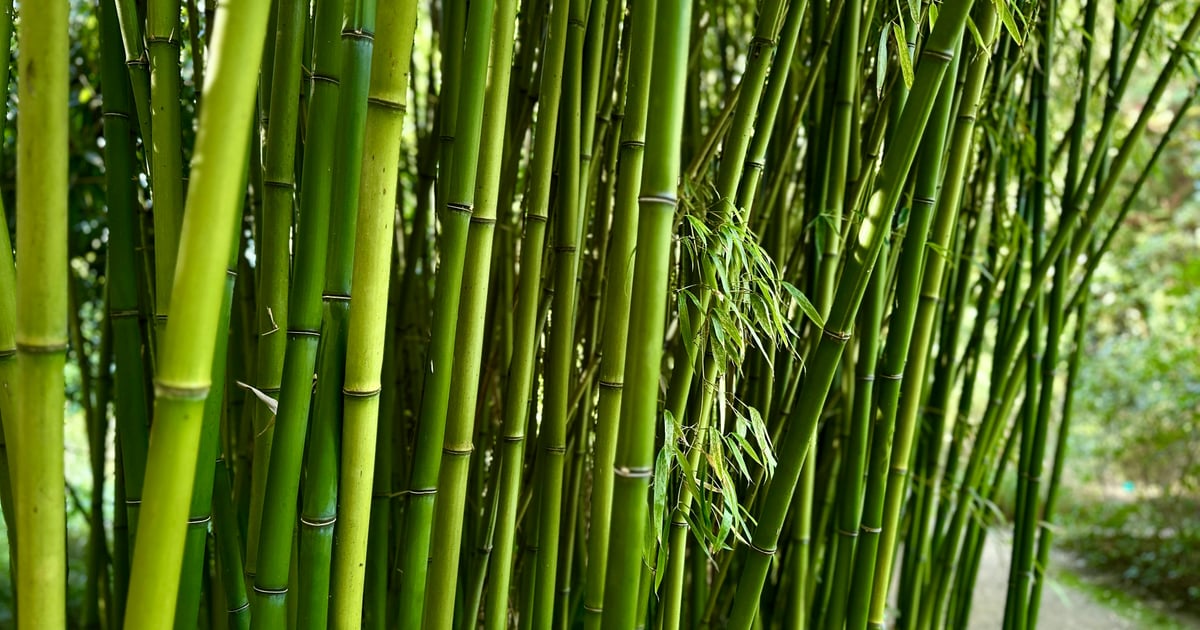
The first thing to understand: almost all bamboo clothing on the market is not bamboo in any meaningful sense. It is rayon (also called viscose) made from bamboo cellulose through a heavy chemical process. The plant input is bamboo, but the fiber that comes out the other end has none of bamboo’s structural properties.
The two kinds of bamboo fabric
There are essentially two distinct fabrics sold as “bamboo”:
1. Bamboo rayon / bamboo viscose (99% of the market)
This is what you are buying when a t-shirt label says “95% bamboo.” It is produced by dissolving bamboo cellulose in a strong solvent — typically carbon disulfide and sodium hydroxide — then extruding the resulting goo through spinnerets to create a fiber. The process is chemically identical to making rayon from wood pulp. The bamboo is a cellulose source, nothing more. The resulting fiber is rayon.
2. Mechanically processed bamboo (also called bamboo linen or “bast bamboo”)
This is genuinely bamboo fiber, produced by crushing bamboo stalks and mechanically separating the fibers, similar to how linen is made from flax. It is rare, expensive, and has a coarse hand feel closer to linen than to cotton. Most of the “sustainable” claims made about bamboo fabric are actually true of mechanically processed bamboo — but it accounts for a tiny fraction of the market. If a bamboo shirt is soft and drape-y, it is almost certainly rayon, not mechanically processed bamboo.
The rest of this article is about bamboo rayon, which is what you will actually encounter in travel clothing.
How bamboo rayon is made (and why the sustainability story collapses)
The bamboo-to-rayon process is chemically intense. Here is the simplified version:
- Bamboo stalks are crushed and dissolved in a solvent bath containing sodium hydroxide (lye) and carbon disulfide.
- The resulting viscous solution is filtered and aged.
- The solution is extruded through a spinneret into a bath of sulfuric acid and sodium sulfate, where it hardens into fiber.
- The fiber is washed, bleached, and dried.
Carbon disulfide is a neurotoxin and a severe occupational hazard for workers in viscose factories. Studies of viscose rayon workers in China and India have documented elevated rates of neurological disorders, cardiovascular disease, and reproductive health problems. Carbon disulfide is also an air and water pollutant — much of the solvent is recovered in modern facilities, but recovery rates vary widely and the chemicals that do escape cause significant environmental impact.
This is why the “bamboo is sustainable” claim is misleading. The plant input is sustainable — bamboo grows fast, needs little water, and sequesters carbon well. But converting that plant into a soft, silky fiber requires a chemical process that is neither sustainable nor clean.
The FTC stance
The U.S. Federal Trade Commission has explicitly addressed this. Since 2009, the FTC has required that fabrics made from bamboo cellulose be labeled as “rayon made from bamboo,” not as “bamboo.” They have issued settlements and penalties against retailers making unqualified “bamboo” or “sustainable bamboo” claims for rayon products. The rule is routinely ignored and sporadically enforced.
The better alternatives
There is a cleaner process for making cellulose fibers, called the lyocell process. It uses a recyclable non-toxic solvent (NMMO) in a closed-loop system where 99%+ of solvent is recovered. Tencel (the Lenzing brand) is the best-known lyocell fiber, typically made from eucalyptus wood pulp but occasionally from bamboo. If you see “Tencel Lyocell” or “bamboo lyocell” on a label, the environmental claims are substantially more defensible than standard bamboo rayon.
How bamboo performs as a travel fabric
With the sourcing story out of the way, the practical question: does bamboo rayon work as travel clothing?
What bamboo rayon does well
- Soft hand feel. Bamboo rayon is legitimately silky and pleasant against skin. For comfort-first travelers, this is real.
- Drapes nicely. It flows more than cotton or polyester and reads as higher-quality in garments like loungewear and summer dresses.
- Breathable in moderate heat. Bamboo rayon has a moisture absorbency roughly equal to cotton, which feels cool in warm weather.
- Cheap. Bamboo t-shirts typically run $15–$35, well below merino.
Where bamboo rayon falls down
- Wrinkles aggressively. Bamboo rayon wrinkles similarly to cotton — a packed bamboo shirt looks packed. This is a significant problem for travel clothing.
- Loses shape when wet. Bamboo rayon sags when it absorbs moisture and does not fully recover without ironing.
- Fragile when wet. Wet rayon has roughly 30–40% of the strength of dry rayon. Aggressive washing damages it.
- Dries slowly. Comparable to cotton — four to eight hours depending on weight and conditions.
- Marginal odor performance. The claim that bamboo is “naturally antibacterial” refers to a chemical (bamboo kun) found in the plant that does not survive the rayon manufacturing process. Bamboo rayon retains odor similarly to cotton — better than polyester, worse than merino.
- Mediocre durability. A bamboo rayon t-shirt typically lasts 18–24 months of regular wear before pilling and shape loss become significant. Merino wool and even good cotton outlast it.
Bamboo vs merino — the honest comparison
Marketing frequently positions bamboo as a cheaper, more sustainable alternative to merino. The performance comparison is not favorable.
| Property | Bamboo rayon | Merino wool |
|---|---|---|
| Odor resistance | Moderate (similar to cotton) | Excellent |
| Moisture wicking | Absorbs but doesn’t wick | Wicks actively |
| Temperature regulation | Limited — cool in heat, not warm in cold | Excellent across range |
| Wrinkle recovery | Poor | Good |
| Dry speed | Slow | Moderate |
| Durability | Poor-moderate | Moderate-good |
| Hand feel | Very soft | Soft (at fine micron) |
| Price | Low | High |
Bamboo wins on hand feel and price. Merino wins on every travel-specific performance metric. For a multi-day travel wardrobe where you want to re-wear garments without washing, merino is the clear choice. Our merino vs synthetic comparison covers the broader merino case.
Where bamboo actually works for travel
Despite all of that, there is a narrow set of travel clothing categories where bamboo rayon is a legitimately good choice.
Underwear
Bamboo underwear is widely sold and reasonably popular, and it works. The garment is small enough that drying time is manageable, shape loss is less critical than in outer layers, and the soft hand feel is a real comfort win in hot humid conditions. Bamboo undewear hand-washes easily in a sink and dries overnight if wrung out well.
That said, merino underwear outperforms bamboo on multi-day wear and odor. For travelers who want to get by with three pairs of underwear for a two-week trip, merino wins. For travelers who will wash nightly anyway, bamboo is a comfortable budget option. Our best travel underwear for men and women roundups cover the full competitive set.
Socks
Bamboo socks, typically blended with cotton and elastane, are popular and perform acceptably for light use. They feel soft on bare feet and handle moderate heat well. However, for serious walking trips (5+ miles per day), merino and synthetic technical socks (Darn Tough, Smartwool PhD) significantly outperform bamboo on durability, blister prevention, and shape retention.
For lounge wear, sleep socks, and casual around-hotel use, bamboo socks are fine. For the day’s primary walking sock, pick merino.
Sleep layers and loungewear
The one category where bamboo rayon genuinely shines: pajamas, lounge shirts, sleep pants. Soft hand feel is the dominant feature. No one cares about wicking or odor resistance in pajamas. A bamboo pajama set is comfortable, affordable, and packs reasonably flat.
Casual city travel shirts (with caveats)
A bamboo or bamboo-blend tee for light city wear — museum days, casual dinners, travel-day clothes — works acceptably. The limitation is rotation: the shirt needs to be washed after wearing, because it will retain odor and lose crispness through the day. Treat bamboo shirts like cotton shirts for rotation purposes.
Where bamboo does not work for travel
Several categories where bamboo is sometimes marketed as a travel fabric but should be avoided:
Outer layers
Bamboo is too soft and too shape-unstable to hold up as a primary outer shirt on a trip. A bamboo button-down wrinkles, sags, and loses structure within a day. For travel button-downs, merino wool, technical wovens (Ministry of Supply, Bluffworks), or linen all outperform bamboo significantly.
Active wear
Bamboo rayon does not wick moisture. Sweat accumulates in the fabric and makes it heavy, damp, and slow to dry. For any active day (hiking, long city walking, cycling), bamboo is the wrong choice. Polyester, merino, or nylon handle activity far better.
Cold weather base layers
Bamboo has minimal insulating value and loses warmth entirely when damp. Merino, silk, and synthetic fleece all perform dramatically better as cold-weather base layers. Our complete layering guide covers the base layer decision in detail.
Multi-day wear without washing
The core travel-clothing value proposition — wear it three days in a row without developing odor — does not apply to bamboo. Bamboo is comfortable for one day of wear, then needs washing. This is functionally identical to cotton, and it means bamboo cannot support the pack-light strategies that merino enables.
Bamboo blends — a middle path
Many “bamboo” products are actually bamboo-cotton blends (typically 60/40 or 70/30) or bamboo-polyester-spandex blends. These blends address some of bamboo’s weaknesses.
- Bamboo-cotton blends drape softly and dry faster than pure bamboo, at some cost in hand feel. These are common in pajamas and t-shirts.
- Bamboo-polyester blends pick up drying speed and durability at significant cost in hand feel — the fabric starts to feel more synthetic than soft.
- Bamboo-spandex blends improve shape retention and stretch. Common in underwear.
These blends are generally better travel choices than pure bamboo. The label disclosure for actual composition matters — a “bamboo” product that is 60% bamboo rayon, 35% cotton, 5% spandex performs very differently from a 95% bamboo product.
The verdict
Bamboo travel clothing occupies a specific niche. It is softer than cotton, cheaper than merino, and environmentally marketed far beyond what the actual production process supports. As a fabric, it is fine for underwear, socks, sleep wear, and casual single-day shirts. It is not a merino substitute, it is not a performance fabric, and its sustainability story is a marketing construct rather than a process reality.
If you are shopping for travel underwear or socks and want a comfortable budget option, bamboo works. If you are shopping for anything else in a travel wardrobe, other fabrics — merino, linen, Tencel lyocell, nylon, well-chosen synthetics — are better choices in their respective categories. Do not let the sustainability marketing talk you into bamboo garments where the performance does not serve you.
For the fabrics that actually earn their space in a travel kit, our case for merino wool and quick-dry fabrics guide lay out the practical hierarchy.
FAQ
Is bamboo fabric actually sustainable?
Not as commonly marketed. The bamboo plant is sustainable to grow, but converting bamboo into soft fabric (bamboo rayon, bamboo viscose) requires a chemical-heavy process that produces neurotoxic byproducts and substantial pollution. The FTC has required manufacturers to label these products as “rayon made from bamboo” rather than “sustainable bamboo” since 2009. Mechanically processed bamboo (bamboo linen) is genuinely more sustainable but is rare and feels like linen, not like soft silky fabric.
Is bamboo really antibacterial?
Not once it has been made into fabric. The antibacterial properties marketers cite come from a chemical in the bamboo plant called bamboo kun. This compound does not survive the rayon manufacturing process. Finished bamboo rayon fabric has odor-resistance properties similar to cotton — moderate, better than polyester, much worse than merino. Any “antibacterial” claim on a bamboo rayon product should be treated skeptically.
Is bamboo better than cotton for travel?
Marginally, in some ways. Bamboo rayon is softer and drapes better than cotton. Cotton is more durable, more wrinkle-predictable, and cheaper. Both share the same fundamental weakness for travel — they absorb moisture and dry slowly. Neither is as good as merino wool or technical synthetics for serious travel use.
Is bamboo underwear worth buying?
For comfort and price, yes. Bamboo underwear feels soft, handles moderate heat well, and is affordable. The limitation is that it needs washing after a day of wear — it will not support multi-day rotation without washing the way merino underwear does. For travelers who hand-wash underwear nightly anyway, bamboo is a solid choice. For travelers packing three pairs for two weeks and expecting them to stretch, merino is the better option.
What should I look for instead of bamboo for sustainable travel clothing?
Tencel lyocell (closed-loop solvent process, made from sustainably sourced wood pulp), responsibly sourced merino wool (look for ZQ or Responsible Wool Standard certification), organic cotton for casual pieces, recycled nylon (Econyl, Repreve), and recycled polyester (rPET) for synthetics. Any of these has a more defensible sustainability story than standard bamboo rayon, and most perform better as travel clothing.