There is no single packing method that beats all others in every situation. Rolling is not always best. Folding is not always worst. The right approach depends on the fabric, the garment, and the suitcase you are working with. After testing every combination we could think of, we have landed on a hybrid method that matches each technique to the clothing type it actually handles best.
This guide covers four methods — rolling, folding, bundle wrapping, and packing cubes — with step-by-step instructions and a clear breakdown of which fabrics suit each approach. For a deeper look at why certain fabrics wrinkle more than others, travel fabrics guide covers fiber types and weave structures.
The Four Packing Methods
Rolling
Rolling works well for casual travel clothing, eliminates hard fold lines, and makes efficient use of suitcase space. But it is not a cure-all — rolling a structured blazer or linen button-down will not save those garments.
Steps: Lay the garment face down. Fold sleeves or sides inward to form a rectangle. Smooth out creases. Starting from the bottom hem, roll tightly and evenly toward the collar or waistband. Keep the roll firm but not so tight that you stretch the fabric.
Best for: T-shirts, casual knits, synthetic athletic wear, underwear, jeans, stretch pants.
Not ideal for: Dress shirts, blazers, linen, tailored trousers.
Rolling avoids the sharp fold lines that create permanent-looking creases. Wrinkle-resistant synthetics and merino wool are particularly well-suited — wrinkle-free clothing guide covers the science behind those fabrics.
Folding
For garments with structure or a desired crease line, folding is genuinely the better choice. The key is folding along natural seam lines with tissue paper or a dry cleaning bag between layers to reduce friction.
Steps: Button or zip the garment fully. Lay it face down. Fold along natural seam lines (shoulder seams for shirts, center crease for trousers). Place tissue paper or a dry cleaning bag over the garment before each fold — the slippery surface reduces friction, which is the primary cause of fold-line wrinkles. Make as few folds as possible. Stack heaviest items on the bottom.
Best for: Dress shirts, blazers, sport coats, tailored trousers, suits, linen (which wrinkles regardless — folding along natural lines keeps creases predictable).
Not ideal for: Casual knits, athletic wear, undergarments — these waste space when folded.
Bundle Wrapping
Bundle wrapping is the least intuitive method and the most effective for wrinkle prevention. Instead of folding or rolling individual garments, you wrap each piece around a central core object, building outward layer by layer. No garment gets a hard fold because each piece follows a gentle curve.
Steps: Choose a core object — a filled packing cube or bundle of rolled socks works well. Start with the most wrinkle-prone garment (blazer, dress shirt, linen piece) laid face down. Place the next garment perpendicular on top, with half extending beyond the edge. Continue alternating garments. Place the core in the center. Wrap the top garment around the core, then work backward through the stack. The most wrinkle-prone garment ends up on the outside, making the gentlest curve.
Best for: Dress clothes, suits, linen, silk — anything where wrinkles are a serious concern. business trip packing list uses this method for dress clothing.
Not ideal for: Quick access. Pulling out one item means unwrapping the whole bundle.
Packing Cubes
Packing cubes are an organizational system more than a wrinkle-prevention technique. Wrinkle performance depends on what you do inside the cube. Where cubes genuinely help is compression: a good compression cube holds garments firmly, preventing the shifting and bunching that causes wrinkles in transit.
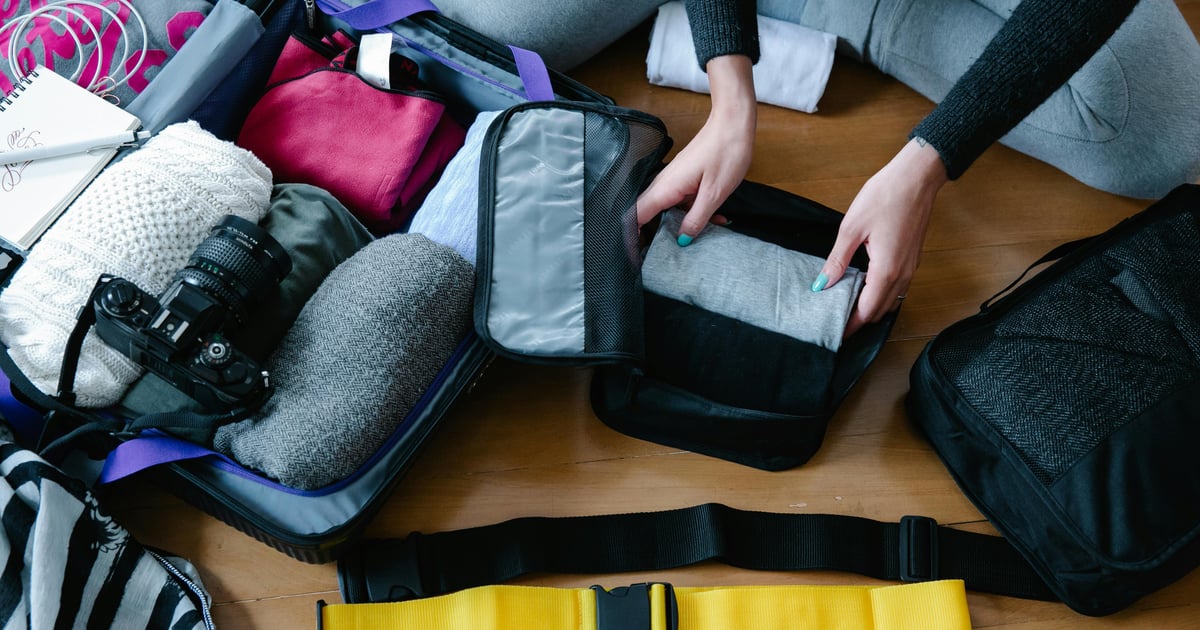
Steps: Choose the right size cube — overstuffed cubes create pressure wrinkles, underfilled ones allow shifting. Roll casual items and pack them upright like files. Fold dress shirts using the tissue-paper method, then place in a cube sized to fit without extra folding. Use compression cubes for bulky items like sweaters, but avoid compressing wrinkle-prone fabrics like linen or cotton dress shirts. Fill gaps with socks to prevent movement.
For cube recommendations, best packing cubes guide covers five sets across different price points.
Method-by-Fabric Matrix
| Fabric Type | Rolling | Folding (with tissue) | Bundle Wrapping | Compression Cubes |
|---|---|---|---|---|
| Merino wool | Excellent | Good | Excellent | Good |
| Synthetic (polyester/nylon) | Excellent | Good | Excellent | Excellent |
| Cotton knits (t-shirts) | Good | Fair | Good | Good |
| Cotton wovens (dress shirts) | Fair | Good | Excellent | Fair |
| Linen | Poor | Fair | Good | Poor |
| Silk | Poor | Good | Excellent | Poor |
| Wool suiting | Poor | Good | Excellent | Poor |
| Stretch blends | Excellent | Good | Excellent | Good |
| Down/insulated jackets | Excellent | Poor | Poor | Excellent |
Merino and synthetics are forgiving across methods — technique matters less because the fibers resist wrinkles naturally. Cotton wovens and linen are the opposite: method matters enormously, and bundle wrapping is the clear winner.
Strategic Layering Inside Your Suitcase
How you arrange items matters almost as much as how you fold or roll them.
Bottom layer (wheels/hinge side): Shoes (in bags), toiletry kits, and heavy items. These create a stable foundation and keep weight low, reducing shifting during handling.
Middle layer: Rolled casual clothing, filled packing cubes, and jeans. These wrinkle-tolerant items absorb compression without damage.
Top layer (lid side): Folded dress shirts, blazers, tailored trousers, and bundle-wrapped garments. These wrinkle-prone items benefit from the least compression. Use the compression panel gently — just enough to prevent shifting, not enough to flatten.
Fill the gaps: Socks, underwear, coiled belts, and small accessories fill empty space. Dead space is the enemy. When items shift, they bunch and wrinkle.
Hard-Sided vs Soft-Sided Suitcases
Hard-sided (polycarbonate, aluminum) protect against external compression. Clothes will not get crushed by other luggage in an overhead bin. The flat interior walls provide better surfaces for bundle wrapping and folding. The tradeoff: fixed dimensions and no flex for an extra item.
Soft-sided (nylon, polyester) absorb impact, which can reduce wrinkles from rough handling. But they are vulnerable to external compression — a heavy bag on top of yours in a luggage hold presses directly into your clothes.
The takeaway: For wrinkle prevention, a hard-sided clamshell with two equal packing compartments gives you the most control. Use one side for rolled casual items in packing cubes, the other for folded or bundle-wrapped dress clothes.
Pro Tips
-
Pack late. The longer clothes sit compressed, the deeper wrinkles set. Pack the night before, not three days early.
-
Use dry cleaning bags liberally. Drape them over folded dress shirts to reduce friction wrinkles. They are free, reusable, and slipperier than tissue paper.
-
Unpack immediately. Hang wrinkle-prone items on arrival. Fifteen minutes on a hanger erases creases that would otherwise set overnight.
-
Steam in the bathroom. Hang the garment while you shower. For more wrinkle removal methods, how to remove wrinkles without an iron covers five approaches that work without special equipment.
-
Do not overpack. A bag at 70-80% capacity wrinkles far less than one at 100%. If everything will not fit, the problem might be what you are bringing — what not to pack covers common mistakes.
-
Heavy fabrics on the outside. When rolling, place heavier items like jeans on the outside of your packing cube arrangement. Their weight holds lighter rolls in place.
FAQ
Does rolling actually prevent wrinkles better than folding?
For casual, stretchy, and synthetic fabrics — yes. It eliminates hard fold lines. But for dress shirts, blazers, and tailored trousers, folding along natural seam lines with tissue paper outperforms rolling. Rolling a dress shirt creates all-over crumpling that looks worse than a clean fold line.
What is the best packing method for a business trip?
Bundle wrapping for dress clothes, rolling for casual items. Wrap shirts, trousers, and blazers around a core object, then roll tees, workout clothes, and underwear into a packing cube. This hybrid approach delivers the best results across both categories.
Do compression packing cubes cause more wrinkles?
They can. Compression cubes work well for synthetic athletic wear, down layers, and bulky knits. Avoid compressing cotton dress shirts, linen, or silk — sustained pressure sets wrinkles that are harder to remove than creases from simple folding.
Does the type of suitcase matter for wrinkles?
Yes. Hard-sided clamshell suitcases protect against external compression and provide flat packing surfaces. Soft-sided bags absorb impact better but are vulnerable to crushing. For checked bags, hard-sided is the safer choice.
How long can clothes stay packed before wrinkles set?
Most packing wrinkles are not permanent and can be removed with steam or a damp towel. But natural fibers like cotton and linen set wrinkles faster than synthetics or merino. Unpack and hang wrinkle-prone items within a few hours of arrival.
Is there a fabric that does not wrinkle no matter how you pack it?
Synthetic performance fabrics and merino wool come closest. Both resist wrinkles at the fiber level. You can roll, fold, or stuff them into a compression cube and they emerge looking largely the same. wrinkle-free clothing guide goes deep on which fabrics deliver on that promise.