The most panicked moment of most trips happens about halfway through. You are standing in a hotel bathroom staring at a red wine splash on your only clean white shirt, trying to remember whether hot water sets stains or removes them, and realizing that the continental breakfast you just dribbled jam on matches the shirt you planned to wear to tomorrow’s meeting.
Stain removal without a washing machine is genuinely harder than at-home laundry, but it is far from impossible. The trick is knowing which technique fits which stain, and carrying the two or three supplies that cover 90% of travel scenarios. Most travelers either overpack (carrying every specialty product they own) or underpack (hoping hotel bar soap solves everything). The right middle ground is small and learnable.
This guide covers the most common travel stains in order of how frequently they wreck a shirt, with specific techniques, supply lists that fit in a toiletry bag, and honest notes about which stains are genuinely removable without a machine and which ones require professional laundry or a write-off.
The Universal First Rule: Act Immediately
The difference between a recoverable stain and a permanent one is usually measured in minutes. A fresh red wine stain rinsed cold within 60 seconds is almost always fully removable. The same stain allowed to dry for a few hours may never come out.
Blot, do not rub. Rubbing pushes the stain deeper into the fabric fibers and spreads the affected area. Blotting from the edges inward lifts the stain without spreading it.
Cold water first, always. Hot water sets most organic stains — blood, sweat, protein-based foods, wine, fruit juice. Cold water keeps the stain mobile and flushable. Hot water is only helpful for specific non-organic stains (grease, oil, some cosmetics) after you have already treated the staining agent.
Work from the back of the fabric. Run cold water through the back of the stain so you push the staining substance out the front rather than pressing it deeper. This alone dramatically improves recovery on most fabrics.
Do not put a stained garment in the dryer or in direct sun to dry. Heat sets stains. Air-dry stained items in shade until you can confirm the stain is out.
With those universal rules established, here are the specific stains.
Red Wine
The most feared travel stain and, counterintuitively, one of the more recoverable if you act fast.
The technique:
- Blot the excess wine with a napkin or towel within 30 seconds. Do not rub.
- Run cold water through the back of the stain for 30 to 60 seconds. Most of the wine should flush out.
- Apply salt or baking soda to the remaining stain if available. Salt draws liquid out of fabric — pour a generous pile on the stain and let it sit for 5 minutes, then brush off and rinse.
- Dab with a small amount of dish soap or a Tide pen (see supplies section). Let sit for 5 minutes.
- Rinse thoroughly in cold water.
- If any stain remains, mix equal parts hydrogen peroxide and dish soap (available at most pharmacies internationally for a few dollars), apply to the stain, let sit 15 minutes, rinse.
- Air-dry in shade. Check before wearing or washing.
What works best: Dish soap is the unsung hero of red wine removal. The surfactants break down the wine compounds effectively, and it is available everywhere. A Tide pen is the portable version.
Fabric notes: Cotton recovers well. Synthetics recover very well (wine does not penetrate polyester fibers deeply). Silk and wool are more delicate — skip the hydrogen peroxide step on those and use cold water plus gentle soap only.
The white wine myth: Pouring white wine on a red wine stain is internet folklore. It does nothing useful. Save the white wine for drinking.
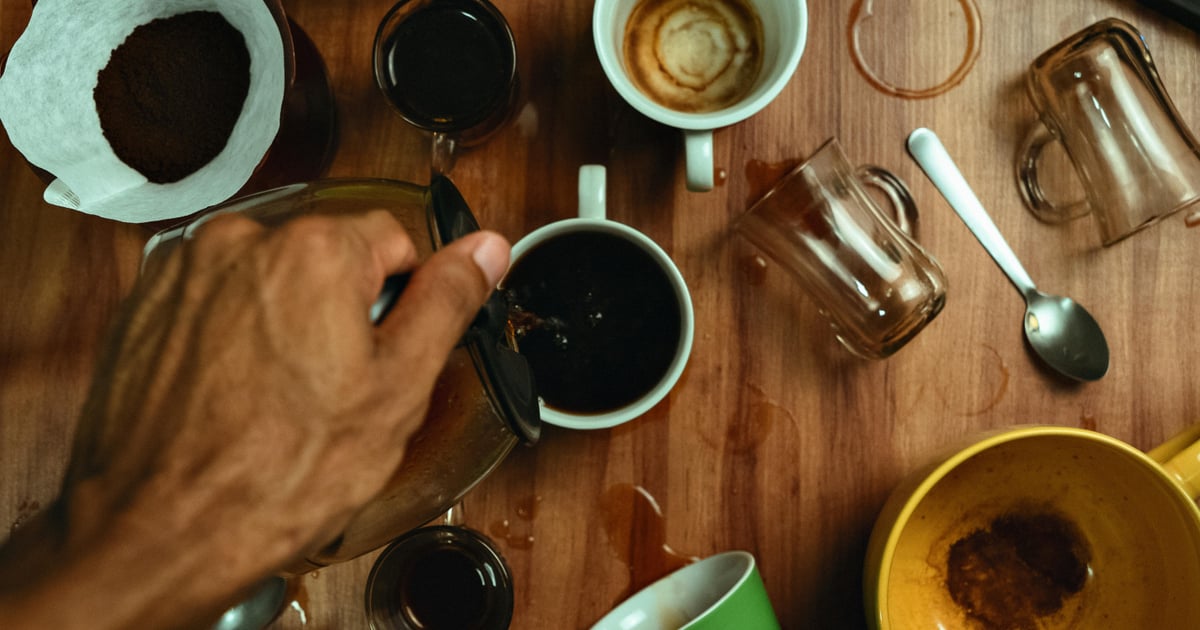
Coffee
The second most common travel stain and surprisingly stubborn on cotton.
The technique:
- Blot excess coffee immediately.
- Run cold water through the back of the stain for 30 seconds.
- Apply dish soap directly to the stain. Work it in gently with your fingertips.
- Rinse in cold water.
- If the stain persists, mix white vinegar with cold water (1:2 ratio) and soak the stained area for 15 minutes.
- Rinse and check. Repeat if needed.
- Air-dry in shade.
What works best: Dish soap for fresh stains. White vinegar for stains that have started to set. Both are available internationally.
Fabric notes: Coffee with milk or cream is harder than black coffee — the milk proteins bond with fabric differently. Treat the milk component first (cold water, enzymatic cleaner like a protein-stain pen if you have one) and the coffee component second.
Older coffee stains: If you discover a coffee stain that has already dried, the soap-and-vinegar technique still works but may take two or three applications. Do not give up on it after the first attempt.
Sweat
The least visible travel stain while you are wearing the clothing and the most embarrassing once it shows. Yellow underarm staining, salt rings, and the back-of-the-shirt sweat pattern on long travel days all fall in this category.
The technique for fresh sweat:
- Rinse the affected area in cold water as soon as possible. Sweat that has not dried washes out easily.
- Apply a small amount of liquid laundry detergent, dish soap, or a few drops of shampoo.
- Gently work into the fabric and let sit for 10 minutes.
- Rinse thoroughly.
- Air-dry in shade.
The technique for set-in sweat stains (yellow underarm, salt rings):
- Mix baking soda with water to form a paste.
- Apply to the stain and let sit for at least 30 minutes, ideally 1 to 2 hours.
- Rinse in cold water.
- If the stain persists, mix equal parts white vinegar and water, soak the area for 20 minutes.
- Rinse and repeat if needed.
- Do not put in the dryer until the stain is fully removed. Heat sets the proteins.
Fabric notes: Merino wool rarely develops visible sweat stains because the lanolin and fiber structure wick and dry moisture before it pools. Cotton, especially light colors, shows sweat quickly. Synthetics develop “sweat memory” — a smell that returns when the fabric is warm, even after washing — which requires a dedicated sport-detergent soak or a vinegar soak rather than stain removal.
For the broader topic of why merino outperforms on sweat, see merino wool vs synthetic.
Grease and Oil
The stain type most likely to happen during a food-focused trip. Olive oil in Italy, peanut oil in Bangkok, butter on a pastry at a Parisian café — grease travels further in fabric than most other stains and feels permanent when set.
The technique:
- Blot (do not rub) excess oil with a napkin or paper towel.
- Immediately apply a layer of baby powder, cornstarch, or plain flour to the stain. Any dry absorbent powder works. Press it gently into the fabric.
- Let the powder sit for 15 to 30 minutes. The powder absorbs the oil into itself.
- Brush off the powder.
- Apply dish soap directly to the stain (Dawn and other degreasing dish soaps are formulated specifically for this — they work on fabric exactly like they work on greasy dishes).
- Work the soap in gently with your fingertips.
- Rinse with the hottest water the fabric can tolerate (check the care label — most cotton and synthetics handle warm water; wool and silk require cold).
- Repeat soap and rinse cycles until the stain is gone.
- Air-dry in shade. Check thoroughly before putting in a dryer — heat sets oil permanently.
What works best: Dish soap. No other household product touches grease the way dish soap does. Carry a small dish-soap packet or decant into a travel bottle.
Fabric notes: Oil is easier to remove from tightly-woven synthetics than from loose natural weaves. Silk stains particularly badly with oil and often needs professional cleaning. Cotton responds well to the full powder-then-dish-soap treatment.
Ink
Pen leaks, hotel-pen explosions, and kid-art accidents. The difficulty depends entirely on the type of ink.
Ballpoint ink:
- Place the stained area face-down on a clean white towel or paper towel.
- Apply rubbing alcohol (isopropyl) or hand sanitizer to the back of the stain. You want it to push through the fabric and transfer the ink to the towel below.
- Blot with another clean cloth — you will see the ink transferring.
- Repeat with fresh towel underneath until no more ink transfers.
- Rinse in cold water.
- Apply dish soap to any remaining residue, rinse.
- Air-dry in shade.
Gel ink:
Same technique as ballpoint but may require more applications. Gel inks are harder to remove and may leave a faint trace even with aggressive treatment.
Fountain pen ink (water-based):
Cold water rinse immediately, sometimes followed by a milk soak (milk binds fountain pen ink in a way water alone does not). Fountain pen ink stains that have dried on natural fibers may not come out without professional treatment.
Permanent marker:
Often unrecoverable. Attempt rubbing alcohol or hand sanitizer immediately; if that fails, the garment may be lost. This is the one stain type where you may need to write off the piece.
What works best: Hand sanitizer is the travel-friendly version of rubbing alcohol and is in every traveler’s bag already. Works on most ballpoint ink stains.
Grass
A stain most common on kids’ clothing and during active travel — hiking days, botanical gardens, picnic afternoons.
The technique:
- Let the grass stain dry completely. Trying to remove wet grass pushes chlorophyll deeper into the fabric.
- Once dry, scrape off any loose plant material with the edge of a credit card or a dull knife.
- Apply liquid laundry detergent or a mixture of baking soda and water to the stain.
- Work gently with fingertips or a soft brush (your hotel bathroom has one).
- Let sit for 15 to 30 minutes.
- Rinse in cold water.
- If the stain persists, mix equal parts white vinegar and water and soak for another 20 minutes.
- Rinse and check. Repeat if needed.
What works best: Enzymatic detergent is ideal for grass because the chlorophyll bond responds to enzyme action. Most liquid laundry detergents sold internationally contain at least some enzymes. The Tide To Go pen also works reasonably well on fresh grass.
Fabric notes: White or light-colored cotton shows grass stains longest. Synthetics release grass more easily. Wool can be tricky — avoid vigorous scrubbing.
Blood
Every traveler deals with blood at some point — a cut while cooking in an Airbnb, an unexpected nosebleed on a plane, menstrual staining. Blood is one of the easier stains to remove if treated correctly, and one of the hardest if treated incorrectly.
The technique:
- Rinse immediately in cold water. Never hot. Hot water cooks the proteins in blood and sets the stain permanently.
- Rinse through the back of the fabric, pushing the blood out the front.
- If any stain remains, apply hydrogen peroxide (available at virtually any pharmacy worldwide). Pour directly on the stain and watch for foaming — the peroxide is actively breaking down the hemoglobin.
- Rinse in cold water.
- If a trace remains, repeat the peroxide step.
- For dried blood, soak the affected area in cold water with a small amount of salt for 30 minutes before moving to peroxide.
- Air-dry in shade.
What works best: Hydrogen peroxide on almost any fabric except wool or silk (test in an inconspicuous area first — peroxide can lighten some dyes). For wool and silk, use cold water with a small amount of enzymatic detergent.
Dried blood is recoverable more often than you would think. Cold soak, enzymatic detergent, and peroxide in sequence can often lift blood stains days after the fact.
Mystery Street Food
The catch-all category for sauces, dressings, spices, and other unidentified food items that end up on your shirt during exploratory eating.
The general technique:
- Identify the probable main component. Is it oil-based (curry, satay sauce, olive-oil based dressing)? Water-based (soy sauce, vinegar-based dressing)? Dairy-based (cream sauce, yogurt)? Contains turmeric (Indian food, some Thai curries)?
- For oil-based: treat as grease. Powder first, then dish soap.
- For water-based: cold water rinse, then dish soap.
- For dairy-based: cold water, then enzymatic detergent.
- For turmeric: this is its own category.
Turmeric stains deserve special mention
Turmeric is the hardest food stain to remove, period. The curcumin compound binds chemically with fabric fibers and resists most household treatments. Sunlight is actually one of the most effective turmeric-stain treatments — UV exposure breaks down curcumin and fades the stain over time. After treating with dish soap and rinsing, hang the damp stained garment in direct sunlight for several hours. You may be shocked at how much the stain fades.
Peroxide also helps on durable fabrics. Combine dish soap, peroxide, and sunlight and you have the best non-professional turmeric-removal protocol available.
The Travel Stain Removal Kit
Here is what actually belongs in your toiletry bag. Everything in this list fits in a small zip pouch and weighs under 200 grams total.
Tier 1: Always carry
- Tide To Go pen (or similar stain-treatment pen). The single most useful stain-removal product for travel. Handles wine, coffee, food, and ink stains adequately in the field. TSA-compliant as liquid. One pen lasts multiple trips.
- Shout Wipes or similar stain-remover wipes. Individually-packaged single-use wipes. Great for on-the-plane or restaurant emergencies. No liquid carry-on concerns. Better for spreading-out stain treatment than a pen.
- A small bottle of concentrated travel laundry detergent. 2 to 3 oz, TSA-compliant. Doubles for general sink-washing. Look for enzymatic detergents — they handle a wider range of stains than basic surfactants. See best travel laundry kits for specific recommendations.
Tier 2: Worth carrying on longer trips
- Dish soap packets. Either grab a few packets from a hotel breakfast buffet or carry a small refillable bottle. Dawn is best — available in the US; Fairy is the UK equivalent; most countries have a comparable degreasing dish soap.
- Baking soda in a small container. Useful for sweat stains and as a general paste for oil or grease. A 30-gram container in your toiletry bag handles multiple incidents.
- A small square of clean cotton cloth. For blotting and as a clean surface to press ink onto. A bandana or a clean handkerchief works.
Tier 3: Acquire at destination if needed
- Hydrogen peroxide. Available cheaply at any pharmacy worldwide. Do not carry it on the plane — buy a small bottle when you arrive if you anticipate needing it.
- White vinegar. Universally available; do not carry from home.
- Rubbing alcohol / isopropyl alcohol. Also universally available at pharmacies. Your hand sanitizer substitutes for small treatments.
The Tier 1 kit handles 80% of travel stains. The Tier 2 kit handles an additional 15%. The remaining 5% usually requires either professional cleaning on arrival home or an acceptance that the garment is finished.
Using Hotel Amenities for Stain Treatment
Most hotels provide more useful stain-removal supplies than travelers realize.
Shampoo. A few drops of any basic shampoo is a surfactant similar to mild detergent. Good for sweat and mild food stains when nothing else is available.
Bar soap. Hotel bar soap works in a pinch on water-based stains. Wet the stain, rub bar soap into it, rinse.
Baking soda packets at the breakfast buffet. Some hotel breakfasts set out small packets or jars of baking soda. Grab one if you spot them.
Dish soap in the minibar area or breakfast buffet. Some hotels have dish soap available near coffee makers or self-serve dining areas.
The in-room coffee maker. Can heat water if you need warm water for grease or oil treatment. Never use it for wool or silk stains, but fine for most synthetic or cotton work.
A hair dryer. For drying a treated spot quickly before a meeting. Keep it on low heat and hold it 6 inches from the fabric.
The Hand-Washing Follow-Up
After stain treatment, a full hand-wash of the affected garment is usually wise. This flushes out residual cleaning agents and helps prevent ring-shaped water marks that can form when treated areas dry differently from surrounding fabric.
See our detailed guide to hand-washing clothes while traveling for technique. The short version: cold water, a few drops of travel detergent, 5 minutes of agitation, 2 to 3 rinse cycles, then roll in a towel to remove water before hanging to dry.
For broader laundry strategy on the road, see best travel laundry kits.
Pro Tips
Treat stains in the bathroom, not over the sink immediately. Pre-treat on a flat surface with a towel underneath. You have more control, and the towel catches any transfer.
Test cleaning agents on an inconspicuous area first. Especially on wool, silk, or brightly-dyed fabrics. A faint color change from peroxide or alcohol on the inside seam is better than a faded patch on the front.
Keep a “probably stained” mental inventory. When you suspect something spilled on you but cannot confirm, check the garment immediately in good light. Stains you do not notice for hours are harder to remove than stains you catch in minutes.
Pack one dark-colored garment per trip. A black or dark-navy tee or top hides stains. When you spill something you cannot fully remove, you can rotate the affected garment to “not-visible-today” and keep traveling.
Respect the write-off moment. Some stains are permanent, especially on delicate fabrics. If a stain has not budged after three treatment cycles, repeated treatment will damage the fabric without removing the stain. Accept it, rotate the piece out of visible service, and move on.
Travel in wrinkle-resistant synthetics for food-heavy trips. Polyester and performance-synthetic blends release food stains far more easily than cotton or wool. A trip to Thailand or Italy is not the time to wear your cotton oxford. For wrinkle-resistant options, see wrinkle-free clothing explained.
FAQ
Does a Tide To Go pen actually work?
Yes, for most fresh stains on light fabrics. It struggles with oil, ink, and set-in stains. Treat it as a front-line tool for fresh spills — apply, blot, rinse at the next opportunity, and move on. It is not a miracle product, but it solves enough minor emergencies to justify carrying one.
Can I use shampoo as detergent in a hotel sink?
Yes, in a pinch. Shampoo contains surfactants similar to laundry detergent but at different concentrations. Use only a few drops — shampoo foams aggressively and can be hard to rinse out. Liquid dish soap is a better substitute if available. Dedicated travel detergent is better still.
Will hot water always set stains?
Not always, but often enough that cold water should be the default for unknown stains. Hot water sets protein-based stains (blood, sweat, dairy, eggs, many food stains) and many organic dyes (wine, fruit juice, coffee). Hot water is useful for grease, oil, and some cosmetic stains after initial treatment. When in doubt, cold water is safer.
What do I do about a stain I cannot identify?
Treat it with cold water first, then with a small amount of mild detergent, and see what happens. If the stain is oily or greasy to the touch, move to the grease protocol (powder, then dish soap). If it has a color, treat as a dye stain (enzymatic detergent and possibly peroxide). Most unknown stains fit one of these two categories.
How do I remove stains from merino wool without damaging it?
Cold water always. Avoid peroxide or bleach. Use a small amount of a wool-safe or general-purpose enzymatic detergent. Do not wring or twist — press water through the fabric rather than scrubbing. For care specifics, see caring for merino wool.
Is it worth taking stained items to a dry cleaner at my destination?
For a single delicate item with a valuable stain, yes. Dry cleaners at most destinations can handle stains beyond your field-treatment capability. For everyday travel stains on regular travel clothing, the cost and time is usually not worth it — use the field techniques and reassess at home.
When to Concede
Some stains are simply not removable in the field. Permanent marker, fully-set oil on silk, and old turmeric on wool are three of the most common “you are not winning this” scenarios. In those cases, the smart move is to accept the garment as compromised for this trip, rotate it out of your visible rotation, and decide on arrival home whether to attempt professional cleaning or retire the piece.
Travel clothing is meant to work hard. A few permanent stains are part of the deal. The goal is not zero stains — it is knowing which ones you can beat, which supplies to carry, and how to keep a small spill from ending the wearability of a piece you need for the next ten days.